
Image Source: Eduardo Woo
By Jessica Bishop
You might not think putting fuzzy little creatures on a map can drive a company’s market capitalization up more than $7+ billion in one single day (its highest one-day surge since 1983), but Pokémon Go did just that. Starting out as collectible trading cards in the late 1990’s and evolving into a video game franchise, Pokémon is back in the spotlight, bringing excitement to investors. Nintendo’s (NTDOY) equity has jumped 50%+ in all since the company unveiled its new game. Let’s talk about why you should care.
What Is Pokémon Go?
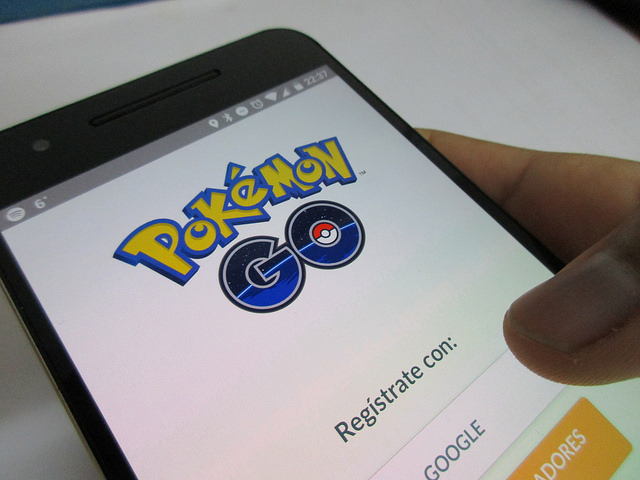
Pokémon Go is a new game (app) for the smartphone that’s been gaining momentum in the US since the morning of its release. After previous success in Asia and Australia, the developer Niantic (partnered with Nintendo) and spun-off from Alphabet (GOOG, GOOGL) last year brought this Pokémon world to the US. At less than a week old, it’s already surpassing popular apps such as Tinder; recent data suggests Pokémon Go has now surpassed Twitter’s (TWTR) 65 million American users, too. It is topping download charts and overwhelming social media, and with an astounding 60% of Android users in the US playing the game every single day for an average of ~45 minutes, it’s almost double the usage time of Facebook’s (FB) Instagram or Snapchat. Whether it’s the nostalgia Pokémon brings from those growing up in the late 1990s, or its addictive quality, Pokémon Go has captured users’ attention, and it doesn’t appear that it will diminish anytime soon.
Technically speaking, what makes Pokémon Go so special is that it is an augmented-reality smartphone game, even if it may not be the first of its kind. The game itself is rather straightforward–the goal of users is to go around (in real life) “catching” all of the ~150 different mystical creatures resembling animals called Pokémon. In fact, the slogan of the Pokémon media franchise is “gotta catch ‘em all.” In addition to trying to collect all the different Pokémon in this augmented-reality app, the greater number of Pokémon caught by the user, the “stronger” (Combat Power) the user will be (in the game). It takes the classic Pokémon story of catching these creatures and now introduces it to the real-world using a phone’s camera and GPS (the app actually buzzes when a Pokémon are nearby).
To be a better player, you can’t just sit around playing the app. Not only do you have to walk around (in real life) to find the nearby Pokémon, but you want to go to the ‘Gyms’ (where you “battle” other Pokémon and win the location of the ‘Gym’), and Pokéstops (where you get items making it easier to catch Pokémon). These are at specific locations all over the US, outside of places such as churches, water towers, or places with historical or cultural significance (such as the Washington Monument). You can also receive an ‘egg’ from these Pokéstops, encouraging the user to walk, as it will only hatch when the user has walked either 2, 5, or 10 km (as determined by the egg).
This Pokémon craze may cause problems due to distracted users staring down at their phone instead of where they’re walking. The loading screen of the app even warns the user to stay alert and aware of surroundings at all times. The app also has its flaws and glitches, as servers were continuously down on the first day of release (users frequently referring to this as the new “blue screen of death”), though this has been extensively improved since that first day. The battery life has also been a weakness, as the battery of the phone seemingly fades faster while playing the game than performing other functions. There have also been concerns about the app gaining permission to access users’ Google accounts. A client-side fix is currently being developed by Niantic, however.
A few “bugs” out of the gate, however, hasn’t quelled the overwhelming number of users playing the game, and even with the possible risks, there is still potential for the expansion of the game. There’s lots the developers can add to the app, such as ability to trade Pokémon with others. Previous Pokémon games have totaled more than 700 different Pokémon, so the ability to introduce new Pokémon to catch will keep the user from overpassing the limitations of the game, subduing boredom. Truly, Niantic appears to be on to something – but whether this is the “next big thing” or just another fad remains to be seen.

Image Source: Valuentum
Why You Should Care
Remember when IBM (IBM) dismissed the personal computer, or Eastman Kodak (KODK) digital film? Remember when the Internet wasn’t a daily part of our lives, or when “everyone” thought social media was just a fad, or when Instagram or Snapchat weren’t even words yet? Facebook alone is now a company with a $330+ billion market capitalization–and frankly, there are still a lot of people that don’t like the social media giant, don’t use its platform regularly, and don’t believe it will last. In some ways, it is due to Facebook’s tremendous success, despite such skepticism, that we are paying close attention to the ongoing Pokémon phenomenon and implications across various industry verticals.
First, where’s the money? Well, Pokémon Go is currently a free app, or a “freemium” game where users don’t have to pay when first downloading the app; instead there’s in-app purchases designed to help users make Pokémon catching easier. As of now, the game’s revenue isn’t driven by big spenders, but by smaller spending of the prevalent number of users playing the game. If users want to progress in the game at a faster pace than others, they’ll be more persuaded to make these purchases. The app itself, however, isn’t much of a “money maker” at the moment, with estimates pegging the game’s revenue at just $14 million through the first few days of launch—that’s not much at all.
The developer of the app Niantic isn’t publicly-traded, even though it is part-owned by Google and Nintendo, the latter also a near one-third owner of Pokémon Co, which controls the merchandising of Pokémon characters. We expect Pokémon Co to be a huge beneficiary of the recent phenomenon as merchandise sales will likely benefit tremendously from the popularity of the app. Could Mattel (MAT) now be interested in Pokémon Co? It’s now a much bigger possibility, in our view, particularly in light of weakness at Barbie and Hasbro’s (HAS) renewed dominance with Disney’s (DIS) Frozen line-up. Pokémon Co would add yet another solid brand to the Mattel franchise.