
Image Source: Michael Vadon
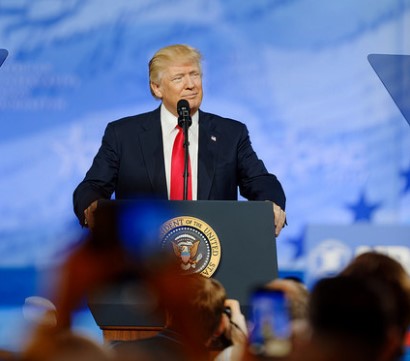
President Trump is making true on his promises to protect the domestic steel and aluminum industries. Input costs may move higher for many global industrials, and the long-term implications of protectionist policy will be tested. We’re not expecting retaliation, but we can’t rule it out either. Rising rates remain our primary concern.
Kris Rosemann and Brian Nelson, CFA
If rising interest rates aren’t enough to give the market heartburn, President Trump announced March 1 that he will impose tariffs on the importation of steel and aluminum to the tune of 25% and 10%, respectively, citing national security concerns. Steel and aluminum stocks rallied hard on the news, but it left many of its industrial brethren under pressure on the trading session March 1, including aerospace and defense contractors and the automakers. We’re most concerned about any retaliatory action by other nations, as generally speaking, protectionism has been a barrier to global economic expansion. The markets have this to worry about when it comes to assessing the pace of global growth, but we’re not overreacting to this bit of news. We believe benchmark interest rates are the most important consideration to watch as it relates to implications on long-term equity values.
Kohl’s (KSS) continued the recent trend of positive earnings reports in the department store space with the release of its fiscal 2017 fourth quarter report, results released before the open March 1. Comparable-store sales leapt 6.3% in the quarter on a year-over-year basis, and its operating margin expanded 80 basis points to 8.4% thanks to better management of inventory and promotional activity. Excluding the impact of tax reform and store closures, diluted earnings per share grew 38% from the year-ago period to $1.99, but free cash flow for the full fiscal year fell to just over $1 billion from nearly $1.4 billion in the prior year. Free cash flow was more than sufficient in covering annual cash dividends paid of ~$368 million, and management declared an increase to the quarterly payout by 11% prior to its earnings release. Looking ahead to fiscal 2018, management expects comparable sales to be flat to up 2% and earnings per diluted share to be in a range of $4.95-$5.45.
In sticking with the theme of positive retail earnings reports, Best Buy (BBY) exceeded the market’s consensus expectation for comparable sales in the US, which leapt 9% on a year-over-year basis, in its fiscal fourth quarter report, released before the open March 1. Strength in appliances and computing/mobile phone comps were drivers of the overall US number, and international sales advanced nearly 10% from the year-ago period as well. GAAP diluted EPS from continuing operations faced some pressure in the quarter due in part to increased investments in overall SG&A and the company’s incentive compensation expense for employees, and free cash flow fell to less than $1.5 billion in the full year fiscal 2018 from nearly $2 billion in fiscal 2017. Management expects fiscal 2019 enterprise comparable sales to be flat to up 2%, and non-GAAP diluted EPS is expected to grow 9%-13% to a range of $4.80-$5.00.
Not all areas of retail have been peaches and cream of late, however. Shares of L Brands (LB) dropped significantly following its fiscal fourth quarter report, released before the open March 1, after the company set profit guidance for fiscal 2018 well below consensus estimates. The weak profit expectations are due in large part to the ongoing mix shift at the firm’s Victoria’s Secret brand, which has been a drag on the business for some time now.
Lithium producers are sharing similar concerns with Morgan Stanley (MS) over the future supply/demand balance in the global lithium markets. Albermarle (ALB), in its fourth quarter conference call, estimated that penetration of electric vehicles in 2025 would rise to 12%, an in-house estimate that is below other estimates suggesting the penetration rate could be in the high-teens. The company estimates that a 12% penetration rate would result in a global lithium market of 800,000 metric tons, which implies a 18% CAGR from 2017-2025, but it alone expects to have 165,000 metric tons of annual capacity by 2021 with only its committed projects.
Meanwhile, Chile’s Sociedad Quimica y Minera (SQM) plans to expand production beyond 2019 “based [only] on market conditions.” However, it has budgeted $170 million for lithium production capacity expansion to 70,000 metric tons per year in 2018 and expects capacity to hit 100,000 in 2019. The company recently reached an agreement with a Chilean regulator that allows it to quadruple production by 2025, a key source of concern across the lithium markets, but management is adamant that this agreement only gives the flexibility to do so as it works to maintain its 25% market share.
Simulated newsletter portfolio idea General Motors (GM) reported a disappointing month of February as total vehicle sales in the US fell 6.9% on a year-over-year basis to 220,905 as its Chevrolet and GMC brand sales fell 8.8% and 8% respectively. Cadillac total sales leapt 14% in the month thanks to its SUV lineup, and Chevy and GMC crossovers experienced solid growth in the month. However, key drivers of the declines in its two largest brands were poor performance in their respective full-size pick-ups, both of which are brand best sellers. Chevy Silverado sales fell more than 16% from the year-ago period, and GMC Sierra sales dropped more than 25%. Interestingly, key rival Ford (F) saw its SUV sales decline by more than 12% in February on a year-over-year basis, but truck sales grew 1.2% in the month as its best-selling F-Series turned in its best February in 18 years. Overall US sales at Ford also fell 6.9%.
Related: SLX, JJU, FOIL
Metals & Mining – Steel: AKS, GGB, MT, NUE, PKX, STLD, X
Metals & Mining – Aluminum: AA, ACH, ATI, CENX, KALU
Aerospace & Defense – Prime: BA, FLIR, GD, LLL, LMT, NOC, RTN
Auto Manufacturers: F, GM, HMC, HOG, TM, TSLA
Agricultural Machinery: AGCO, CAT, CNHI, DE, HEES, MTW, RBA, TEX
—–
Valuentum members have access to our 16-page stock reports, Valuentum Buying Index ratings, Dividend Cushion ratios, fair value estimates and ranges, dividend reports and more. Not a member? Subscribe today. The first 14 days are free.
Kris Rosemann and Brian Nelson do not own shares in any of the securities mentioned above. Some of the companies written about in this article may be included in Valuentum’s simulated newsletter portfolios. Contact Valuentum for more information about its editorial policies.