
Image Source: Valuentum
By Brian Nelson, CFA
The world is bouncing back in a big way from the coronavirus (“COVID-19”) pandemic, and some of America’s top brands have put up impressive calendar second-quarter results. Ford’s performance may have been the most interesting from an investor perspective, and we continue to warn against Boeing in light of its weak cash-based fundamentals and the tremendous flexibility that program accounting can have with respect to GAAP financials.
Though the following five companies are not included in the newsletter portfolios, they should be on your radar, especially as it relates to market-moving trends and economic information. Our favorite ideas remain in the Best Ideas Newsletter portfolio and Dividend Growth Newsletter portfolio, which have been performing fantastically this year. To access the 16-page stock reports for the following companies, please use the symbol search box in our website header and select the pdf icon to the right of the stock chart.
Coca-Cola’s Shares Are Not Cheap
Coca-Cola (KO) is a great company with a future that may be as promising as its past, but its share price is already building in some lofty expectations. Investors may expect modest returns from this American icon in the coming years. The company is recovering nicely from the depths of the COVID-19 swoon, however, and it posted impressive net revenue expansion and operating income growth of 42% and 37%, respectively, in its second-quarter report, released July 21.
The iconic beverage maker has always traded at a premium multiple, despite its net debt position, and we think its equity continues to be a bit pricey. Shares are trading hands at ~$57 each, while the company offers investors a near-3% dividend yield. It’s hard not to like Coca-Cola, but it doesn’t quite make the cut for any of our newsletter portfolios. The high end of our fair value estimate range stands at $50 per share.
McDonald’s Investors Are Lovin’ It
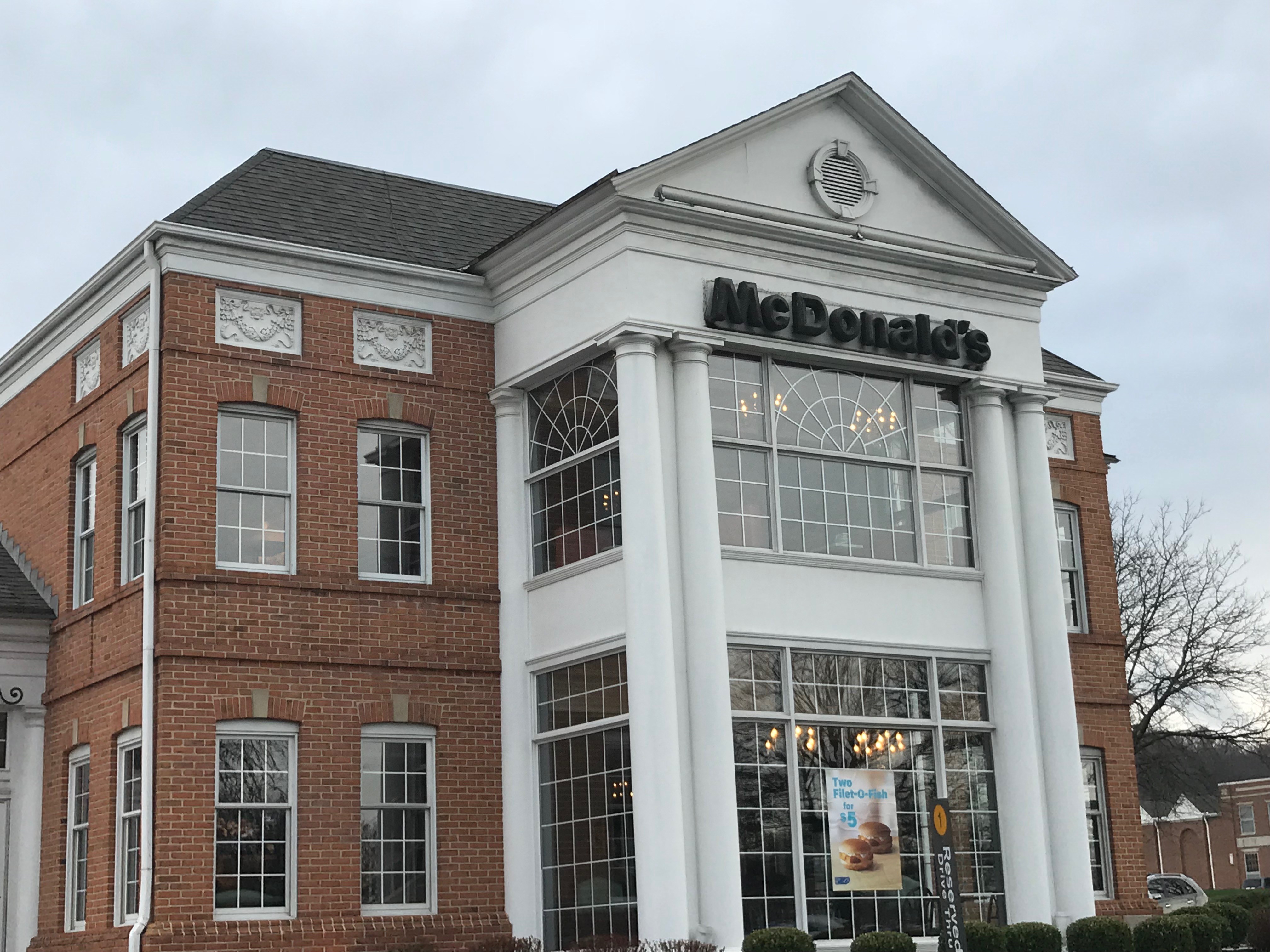
The world’s appetite for McDonald’s (MCD) has not waned post-pandemic, and the executive team’s ability to continue to deliver for its franchisees through thick and thin may continue to make the fast-food giant a long-term winner. The company crushed second-quarter consensus estimates when it reported results July 27. Revenue soared over 56% during the quarter ending June 30, while non-GAAP earnings per share came in at $2.37, beating the Street’s estimate by $0.25. As with Coca-Cola, McDonald’s is bouncing back nicely from the COVID-19 meltdown.
The re-opening of dining rooms across the world and increased demand for its trio of new chicken sandwiches spurred the tremendous sales increase. Top-line expansion won’t continue at this pace as this quarter lapped the worst performance last year, but the company’s promotions such as that with South Korean band BTS and a meal from rapper Travis Scott will likely offer new areas to keep interest in its food offerings.
As with Coca-Cola, however, there is nothing hidden with this story, especially as shares trade above our fair value estimate of $211 per share. McDonald’s has delivered for investors time and time again, however, and we must say that investors are “lovin’ it.” The company offers investors an attractive dividend yield of ~2.2%, and we expect continued growth in the payout for years to come.
Ford Delivering the Right Product, Ups Guidance
While other automakers failed during the Great Financial Crisis, Ford (F) battled through it without wiping out its equity. Tesla (TSLA) may have consumer mindshare when it comes to electric vehicles these days, but we’re not counting Ford out by any stretch. Ford’s second-quarter 2021 results, released July 28, showed that the company has been reinvigorated despite challenges related to semiconductor chip shortages.
The tried-and-true automaking giant reported second-quarter revenue of $26.8 billion, net income of $561 million and adjusted EBIT of $1.1 billion. Ford raised its full-year 2021 adjusted EBIT guidance and adjusted free cash flow guidance to the range of $9-$10 billion and $4-$5 billion, respectively. Cash and liquidity remain sound at the company, coming it at $25.1 billion and $41 billion, respectively, at the end of the second quarter.
Product is the name of the game when it comes to autos, and Ford’s line-up isn’t too shabby. Its all-electric sport utility vehicle, the Mustang Mach-E, is near the top in its sales category, while the F-150 Lightning has hauled in 120,000 reservations since it was announced to the public just a few months ago. We won’t be adding Ford to any newsletter portfolio, but it’s good to see the automaker successfully battling through the toughest of times once again.
Boeing Is a Value Trap, Cash-Based Financials Atrocious
It may take years, perhaps a decade or more, for Boeing’s (BA) financials to fully recover from its 737 MAX debacles and ongoing management miscues within its space division, while rivals such as Virgin Galactic (SPCE) continues to make progress. We’d prefer to remain on the sidelines with one of America’s iconic aviation giants, and we wouldn’t be surprised if Boeing becomes one of the worst Dow performers in the coming years.
The company’s financials are in tatters. During the first half of 2021, Boeing burned through ~$4.4 billion in free cash flow after it torched $10.4 billion during the same half-year period a year ago. Total consolidated debt stood at $63.6 billion, while cash and marketable securities stood at $21.3 billion at the end of the second quarter–good (or rather, bad enough) for a net debt position north of $42.3 billion.
We caution investors not to pay too much attention to GAAP accounting earnings at Boeing due to program accounting, which offers considerable flexibility for management to “massage the numbers.” Focus on net cash on the balance sheet and free cash flow generation. Both remain weak. We’re not going anywhere near Boeing, and this cautiousness extends to most of the supply chain, including Sprit AeroSystems (SPR) and Triumph Group (TGI).
Procter & Gamble Has Proven Doubters Wrong
Procter & Gamble (PG) proved a lot of investors wrong when it executed flawlessly upon its brand optimization strategy years ago. The company has reached new heights, but it may now have to work through difficult comparisons from outsized demand caused by pantry stuffing during COVID-19 and cost pressures from inflationary headwinds.
The consumer staples giant reported calendar second quarter (fiscal fourth quarter) 2021 results July 30 that beat expectations on both the top- and bottom lines. P&G expects fiscal year 2022 all-in sales expansion to be in the range of 2%-4%, almost all of it coming from organic performance. GAAP earnings per share for fiscal 2022 is targeted to grow 6%-9% over the fiscal 2021 mark of $5.50.
We’ll be taking a close look at our valuation model for Procter & Gamble, but shares are too rich for our blood at nearly 25x consensus earnings expectations for fiscal 2022. The high end of our fair value estimate range stands at $126 per share. Shares, however, are trading hands at ~$144 each at the time of this writing. P&G yields ~2.4%.
We continue to be bullish on stocks for the long haul. View our latest video here.
—–
—–

Image Source: Value Trap
———-
Valuentum members have access to our 16-page stock reports, Valuentum Buying Index ratings, Dividend Cushion ratios, fair value estimates and ranges, dividend reports and more. Not a member? Subscribe today. The first 14 days are free.
Brian Nelson owns shares in SPY, SCHG, QQQ, DIA, VOT, and IWM. Brian Nelson’s household owns shares in HON, DIS, HAS. Valuentum owns shares in VOO, SCHG, DIA, and QQQ. Some of the other securities written about in this article may be included in Valuentum’s simulated newsletter portfolios. Contact Valuentum for more information about its editorial policies.