
Let’s walk through the investment merits of one of the market darlings in biotech.
By Alexander J. Poulos
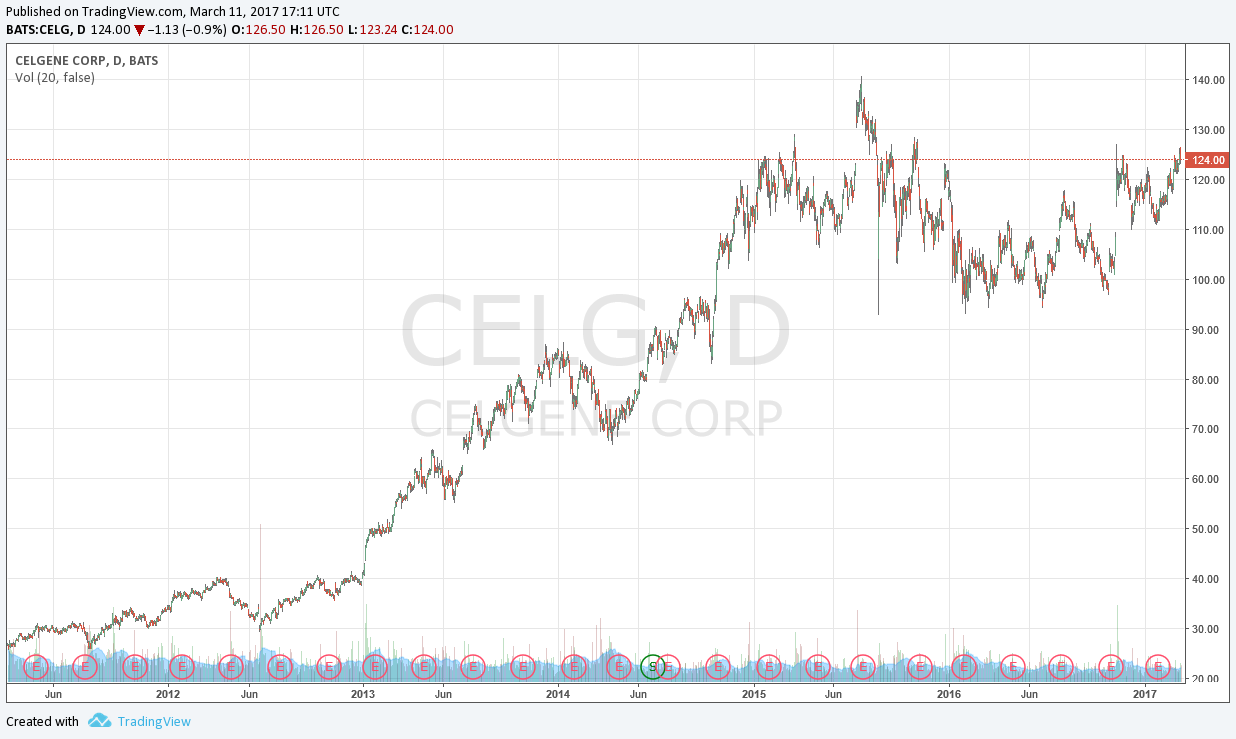
Growth equities offer an enticing mix of above average growth that can turbocharge the overall returns of a well-diversified portfolio. It seems as though the market often becomes infatuated with the next “market darling,” often bidding the equity up well above its fair value (in hopes that growth may continue indefinitely). We admire growth companies, but we also stay true to our value bent, looking for opportunities in well-run companies that have pulled back once the initial enthusiasm for the share price has worn off. The report below will discuss the merits of Celgene (CELG), a biotech stalwart that has pulled back from its stellar heights seen in 2015.
Oncology
The quest to bring forth novel therapies for the treatment of various cancers remains one of the hottest areas of research. The market continues to heap far richer premiums on innovative companies that can bring forth new treatments versus other disease states. Part of the reason remains the reluctance of the end payers to push for price reductions unlike what has been recently witnessed in the diabetes market.
The primary cause of the reluctance of price competition is the fear of slowing the cutting edge research currently being conducted. The pharma/biotech space is witnessing a seismic shift with the major players devoting the majority, and in some cases the entirety of the R&D budget, searching for treatments for various forms of cancer.
Not all treatments are the same, however–the key is to bring forth a differentiated molecule that can attain first-line treatment status. The goal is straightforward: develop a first line therapy that will allow for maximum patient eligibility. If a treatment is granted a third of fourth line treatment, chances are the end market of users will be quite small, thus limiting the sales potential of the compound.
Celgene, thanks to its innovative treatment for Multiple Myeloma (MM) named Revlimid, continues to post stellar double-digit top line growth. Multiple Myeloma is a cancer of the blood, in this particular case, affecting plasma cells. Plasma cells play a role in the body’s immune system, with plasma cells transporting specific antibodies to fight off infection. In essence, a patient afflicted with MM will not only suffer from a compromised immune system, but the disease can often lead to anemia, which further zaps the patient’s energy. The incidence of MM rises with age with the typical patient well into their 60s at the time of diagnosis. Keeping the average age of diagnosis in mind, the disease has a demographic tailwind with the rapidly-aging worldwide demographic, which may further fuel demand for the product.
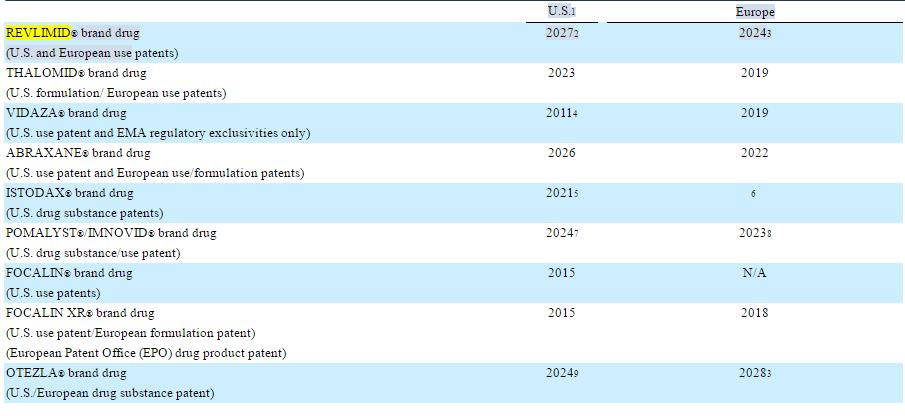
Image Source: Celgene