
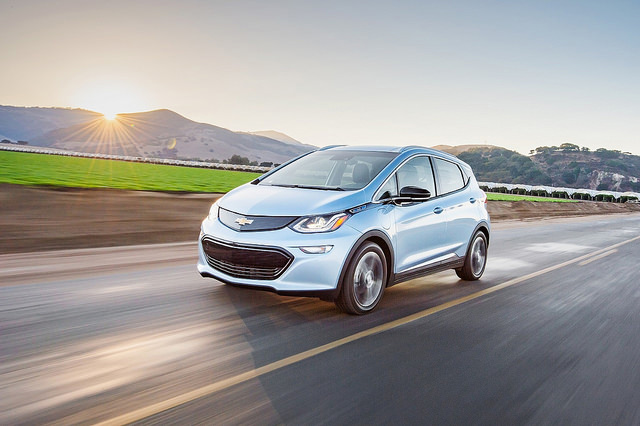
Image Source: HimmelrichPR
Let’s dig into some recent developments surrounding the auto market, and how technological and strategic innovation could reshape the future of the space.
By Kris Rosemann
There have been a number of interesting developments related to the auto space recently, from Theresa May and the UK government triggering Brexit to pressure on the US used vehicle and auto lending markets to the seemingly inevitable proliferation of autonomous vehicles. Such progressions should not come as a surprise; in fact, we outlined some potential concerns with the long-term health of the US auto market in July 2016, “Sharp Curves Ahead for US Auto Market?”
The cyclical US auto market may be plateauing after multiple years of tremendous sales levels following the very difficult years of the credit crunch of late last decade. Industry giant Ford (F) anticipates a slight drop in both 2017 and 2018 on a year-over-year basis in terms of number of vehicles sold, even as incentive spending from automakers grows. Pent-up demand from the Great Recession may be finally beginning to wane, but Ford points to some potential US policy changes as having an impact on the volume of vehicles sold as well.
Rising interest rates may continue to increase borrowing costs in the country, increasing the cost of ownership for the average consumer, and the auto lending market, particularly subprime lenders, has already been a source of concern as lower-tier consumer credit quality has been called into question. The proposed tax on net imports would likely weigh on the demand levels by raising the all-in cost of production for certain vehicles whose production takes place outside the US, while the Trump administration’s plans for the renegotiation of NAFTA also have the potential to impact the flow of goods from country to country.
The UK and European auto markets are in a similar situation concerning international trade uncertainty as the process of Brexit begins. From that July 2016 article:
Major automakers may be facing yet another obstacle in the form of the United Kingdom’s exit from the European Union, as the material weakening of the British pound (FXB) is expected to have a significant impact on the UK (EWU) auto market. The uncertainty in the country’s economy is anticipated to pressure investments, both in human capital and physical capital, as businesses, including car manufacturers in the nation, await greater economic clarity. The UK car industry has been advancing nicely in terms of production in recent years, but approximately 80% of vehicles made in the country are exported, with nearly 60% of these exports going to Europe. Conversely, roughly 80% of vehicles sold in the UK are produced in EU member nations.
Currency moves may provide challenges as well as opportunities (from which side of the English Channel one looks at it), but such large import-export dynamics open the door for potential trade restrictions with the remainder of Europe as a result of ‘Brexit.’ The full implications of which remain uncertain at this point, but it could severely impact the auto sector that supports ~800,000 jobs and contributes ~£15.5 billion to the UK economy. Some early observers are expecting both the European Union and the UK to impose tariffs on vehicles imported from the at-odds entities, making a large portion of the UK and European auto markets materially more expensive for average consumers. Early projections are estimating UK auto sales could fall 15% in 2018, representing the loss of almost half a million vehicle sales from expectations based on the UK staying the EU.
In what we think was a prudent move after considering the levels of economic uncertainty and past operational struggles in the region, newsletter portfolio holding General Motors (GM) recently sold its European operations for €2.2 billion. Other automakers with operations and exposure in the EU and UK have been pounding the table, demanding a trade deal be completed between the two sovereign entities that guarantees ongoing tariff-free trade. The result for GM is a more simple business with a greater focus on major auto markets such as China and the US, and potentially a major leg up on international rivals with operations directly exposed to Brexit’s economic ramifications. We like the more narrow focus, particularly in the US, where technological, and strategic, innovation is more important than ever to stay relevant.
In the US auto market, three important concepts or developments will be core to the future of the space as it evolves: 1) transportation as a service (TaaS), or point-to-point mobility for a fee such as ride-sharing, dynamic shuttles, and package delivery; 2) vehicle management as a service (VMaaS), or integrated end-to-end management of a fleet of vehicles including vehicle acquisition, vehicle financing, insurance, maintenance, and disposal; and 3) autonomous vehicles, which will be at the core of concepts 1 and 2.
Autonomous vehicles, as they are expected to evolve at this point in time, will require two subsets of products to run effectively and in coordination with the first two strategic concepts, virtual driving systems and autonomous vehicle platforms. Virtual driving systems are comprised of computers, sensors, software and electronics that enable the autonomous vehicle to function without a human driver, while autonomous vehicle platforms integrate and support the operation of TaaS and VMaaS. Auto giants GM and Ford and the competition are already investing or have committed to investing billions of dollars annually into these concepts, but at this point in time, it is nearly impossible to assess and evaluate how things will eventually shake out due to the rampant levels of uncertainty regarding the evolution of the technology, as well as how the integration of more traditional industrial firms with rapidly advancing technology and massive amounts of data plays out.
Perhaps the most important question to ask as we enter the age of autonomous driving and cloud-connected cars is who will control the tremendous amounts of data created by these vehicles, and it will be a tremendous amount, estimates suggest that one vehicle will create the data equivalent of 3,000 individual people per day. We raised the same question in our analysis of Intel’s (INTC) acquisition agreement with Mobileye (MBLY), “Intel Makes Strong Move into Autonomous Driving,” and we maintain the notion that this may very well be the driving force behind the evolution of the auto landscape in coming decades. Automakers will be looking to avoid the struggles hardware makers are currently experiencing in the PC market by controlling massive troves of data, which would potentially enable them to better understand how to serve the transportation needs of consumers.
Another distinct yet adjacent development worth monitoring in the US auto market is the material amounts of pressure we’re seeing on used vehicle prices. The surge in demand for new cars in recent years is causing a surge in the supply of late model used cars as vehicles come back to dealer lots following their lease period or as consumers continue to ‘trade up’ on a multi-year cycle. We posit that the impact of this dynamic will be accentuated by the aforementioned technological advances, which are expected to reduce demand for vehicles in the future, as overall new vehicle sales remain, and are expected to remain through at least 2018, near peak levels.
The above supply-demand dynamics could become a serious problem for automakers if they are not able to effectively manage inventory and production levels leading up to the autonomous driving age. Obsolescence risk will become an even more important consideration in the industry. We would expect the transition to be a somewhat gradual one, which should help automakers adjust to changing demand, but if new auto sales remain near peak levels in coming years, driving used car supply higher in the years that follow, we could see a severe supply-demand imbalance.
When absorbing such a wide range of potentially harmful or revolutionary information for the auto industry, investors must be cognizant of the varying timeframes and likelihoods of any major events coming to fruition. Targets for the first mainstream autonomous vehicle have mostly been set at the 2020-2021 range, suggesting automakers have some time to develop and refine their strategies as the industry moves forward technologically. In the case of Brexit, the uncertainty surrounds whether or not the EU and UK are able to strike an agreeable trade deal. Regardless, we think GM’s move to exit Europe altogether was the right one. GM could eventually see some pressure in China, where it has multiple joint ventures, as the government has begun to roll back incentives that had been helping boost vehicle sales (particularly of small cars).
All things considered, our investment thesis on GM remains intact, and we plan to continue including shares in both newsletter portfolios. Despite potential demand issues, GM’s management expects 2017 to be another strong year in China in addition to ongoing strength in North America thanks in part to effective vehicle innovation, a positive sign for things to come. A healthy ~4.3% dividend yield is tough to pass up, and shares remain underpriced compared to the rest of the frothy market at just ~6.2x the midpoint of 2017 earnings guidance. We still like GM!
————–
Related: ALLY, CACC, CARZ, IPD, SC
Auto Manufacturers: F, GM, HMC, HOG, TM, TSLA
Retail – Auto: AAP, AN, AZO, CPRT, GPC, KMX, MNRO, ORLY, PAG