
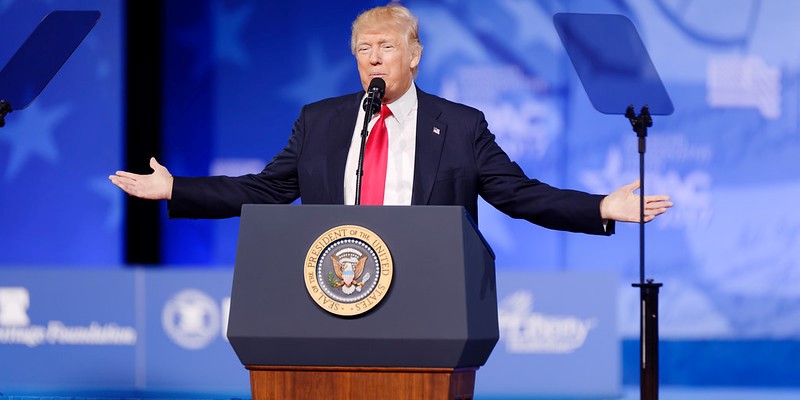
Image Source: Michael Vadon
We don’t think US and China are anywhere close to any sort of meaningful trade agreement, regardless of what you hear from the White House. The latest move in this high-stakes trade war by the US may be to de-list Chinese stocks. This actually happening seems surreal given the implications on U.S. investors, but given weakness in US-listed Chinese names, the market is factoring in some probability of this occurring.
By Brian Nelson, CFA
On September 27, news hit the wires that indicated the White House is evaluating ways to curtail US investors’ “portfolio flows into China,” and that may include de-listing Chinese stocks on U.S. exchanges. Although the development comes amid the view that discussions between Washington and Beijing are “occurring,” we can’t see how this can be a positive read on trade negotiations between the two superpowers, even if the White House may be bluffing (which we think it is). In any case, we maintain our view that we likely won’t see any US-China trade deal of substance until after the 2020 election:
It is possible President Trump’s political advisors have painted him into a corner. We’ll see what happens at the next meeting, but I don’t think China is ready to put things behind it. I think China will wait until after the 2020 election to determine long-term trade policy. – Brian Nelson, CFA
The news is not material to holdings in the newsletter portfolios, as we’ve generally shied away from many of the US-listed Chinese firms. Some of the names trading down during the session September 27 are Alibaba (BABA), JD.com (JD), Baidu (BIDU), Tencent (TCEHY), iQiyi (IQ), Weibo (WB), Sina (SINA), Nio (NIO), Luckin Coffee (LK), Melco Resorts (MLCO), Vipshop (VIPS), Momo (MOMO), Baozum (BZUN), HUYA (HUYA), Ctrip (CTRP) Sohu, (SOHU), and Autohome (ATHM).
Concluding Thoughts
If we had included any US-listed Chinese names in the newsletter portfolios, they would have been removed some time ago. We don’t like this recent development at all, and importantly, stipulations in many equity agreements of US-listed Chinese firms indicate that investors don’t really have direct ownership in these companies. Stock in Alibaba, for example, are actually shares in an variable interest entity based in the Caymans that only has a claim on Alibaba’s profits. Backlash from China on whatever the White House might be considering could turn out to be a huge problem for holders of US-listed Chinese names, in our view. We’re staying far away.
Related: FXI, MCHI, KWEB, GXC, YINN, YANG
Valuentum members have access to our 16-page stock reports, Valuentum Buying Index ratings, Dividend Cushion ratios, fair value estimates and ranges, dividend reports and more. Not a member? Subscribe today. The first 14 days are free.
Brian Nelson does not own shares in any of the securities mentioned above. Some of the companies written about in this article may be included in Valuentum’s simulated newsletter portfolios. Contact Valuentum for more information about its editorial policies.