
By Kris Rosemann
Late September brought two announcements from Apple (AAPL) that should bode well for demand for its mobile devices and wearable technology and add to the reach of its ecosystem of apps.
On September 28, the firm announced a partnership with consulting firm Deloitte & Touche to form a service called ‘EnterpriseNext’ in which Deloitte is creating a service with over 5,000 strategic advisors focused on helping businesses maximize the effectiveness of their use of iOS with iPhones and iPads. Deloitte CEO Punit Renjen pointed to his company’s use of Apple products, and 75 custom apps, as a core driver behind the deal. Deloitte will not only offer consulting services across more than 20 industries but will also assist in producing native apps to fit with existing business platforms in areas such as enterprise resource planning, customer relationship management, analytics, and human resources.
Blackberry’s (BBRY) recent exit from the hardware business has opened up some market share within the enterprise market, and such an opening makes the growing segment even more attractive. Businesses are buying more and more mobile devices for employees in place of personal computers as they too are following the secular trend of the Internet going mobile. Apple’s iPad could benefit the most from the harder push into the enterprise space, but it is worth noting that the firm’s sales to corporate entities jumped 40% to $25 billion in fiscal 2015.
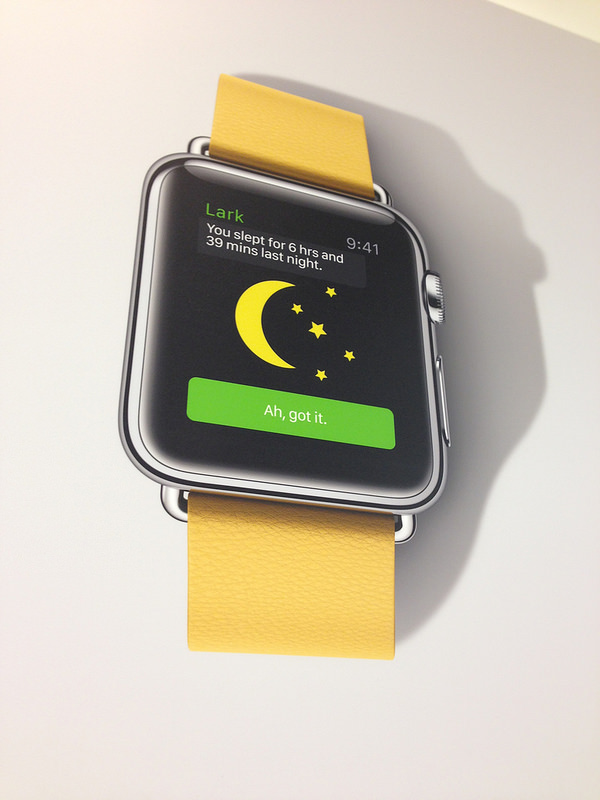
In addition to its expanding enterprise IT offerings, Apple is expecting to gain an advantage for its Apple Watch in the wearable technology market thanks to Aetna’s (AET) choice to begin subsidizing Apple Watches for certain employers and individual customers. The health insurer has also promoted a number of apps associated with managing health that are exclusive to the iOS. While we see this as an immaterial factor in Apple’s overall top line, the deal could be an important one in terms of branding and market position, as well as a large positive for the proliferation of healthy lifestyle apps in its ecosystem. Fitbit (FIT), along with other competitors, will suffer as a result, and the firm’s most recent product iteration has not yet been met with the fervor of its prior releases, particularly concerning as the holiday season approaches.
While these deals will not be major needle movers for Apple, we do believe they will play a role in the firm’s ongoing battle to improve its competitive positioning. The increased adaptation of the Apple Watch in healthcare and health management is a driver of growth for the technology that Apple envisioned being an important one as it designed the watch, and Aetna subsidizing the Apple Watch should help the increase in activity in this area for Apple. We would love to see Apple’s ecosystem fully infiltrate the health management practices of consumers.
On a similar note, Apple being able to further its relationships with enterprise customers via unique apps and expanded iOS functionality could provide a larger growth opportunity in terms of its ecosystem compared to the impact it could have on hardware sales. We will monitor progress from Deloitte in implementing its advisory practices, but if Apple is able to get anywhere close to its level of inclusion in consumers’ everyday lives in the business world, the deal will be a home run for years to come. We’re excited about the opportunities it brings.