
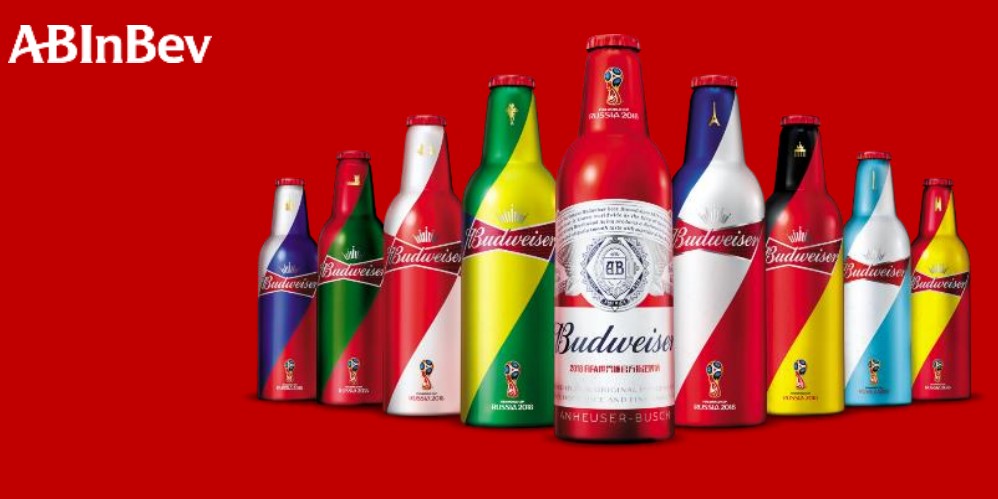
Image Source: A-B Inbev
A couple other research shops have said that Anheuser-Busch’s and Vector Group’s dividends may be at risk, and we agree. Both of their Dividend Cushion ratios are far below 1, and Anheuser-Busch’s Dividend Cushion ratio is -0.6! Are we expecting a dividend cut tomorrow? No. But we prefer dividend growth ideas that have Dividend Cushion ratios far greater than 1.
By Brian Nelson, CFA
You have to learn our methodologies to understand what we are talking about. For example, there are volumes of information contained in just one number such as the Dividend Cushion ratio (select links: efficacy rate of approximately 90%, how the Dividend Cushion ratio is calculated). This is partly why we spend so much time explaining our methodology and talking through our processes because once you understand them, you can easily understand our opinions about companies in just a few metrics (fair value estimate range, Dividend Cushion ratio, and share-price momentum, for example). Certainly, the qualitative matters, but without a solid methodological foundation, you’re going to require textual explanations in every instance, whereas an understanding of the methodological framework will save you a tremendous amount of time.
On October 1, it was reported that Evercore ISI put out a warning about a dividend cut at Anheuser-Busch InBev (BUD). According to the report, “the drop in the dividend payout by A-B could lead to some selling pressure from mutual funds focused on dividends.” What should you do when you hear something like this? Well, if another research firm is calling for a dividend cut, check out Valuentum’s Dividend Cushion ratio for the company. Ask: Is it significantly above 1 (great), about at 1 (borderline, okay), is it below 1 (risky), is it below 0 (very risky, possible cut in future years)?
Anheuser-Busch’s Dividend Cushion ratio is -0.6 (negative 0.6) meaning that, yes, we would tend to agree that a dividend cut may be likely in the coming years. It is also very likely that income investors that are involved in the company may sell the stock, pressuring shares (if they haven’t already). That said, we still think Anheuser-Busch’s shares are underpriced, with a fair value estimate of $101 per share at the time of this writing. We wouldn’t consider them to be severely undervalued, however, as shares are still trading within our fair value estimate range of $78-$124.
The company is not included in either simulated newsletter portfolio, so it’s not one of our favorites, especially in that its equity price has been under pressure (we like stocks with good momentum), It’s important to note that simulated newsletter portfolio idea Altria (MO) does have a meaningful stake in the company, but we wouldn’t expect dividend troubles at Anheuser-Busch Inbev to severely impact the intrinsic value of Altria’s stake in the entity. Expectations of a dividend cut may impact Anheuser-Busch Inbev’s share price in the near term, but Altria appears to be a long-term holder and the dividend is a symptom of value, not a driver of it.
On October 3, it was reported that Vector Group’s (VGR) dividend holds “increased risk,” by the team at Oppenheimer. What should you do? Check the Dividend Cushion ratio. That’s right. Vector Group’s Dividend Cushion ratio is 0.1, so while its dividend may not be as risky as that of Anheuser-Busch, it definitely isn’t ironclad. Remember, dividend growth investors should generally like companies that have Dividend Cushion ratios far greater than 1 because it implies that their future expected free cash flows will be greater than their future expected dividends, after considering the net position of the balance sheet, over a 5-year period.
The Dividend Cushion ratio has an excellent efficacy rate of approximately 90% in warning about dividend cuts in advance, but it should also be viewed as a ranking mechanism. Generally speaking, a company with a Dividend Cushion ratio of 3 is far better positioned than a company with a Dividend Cushion ratio of -3. But again, because the Dividend Cushion ratio is forward looking, the difference between a ratio of 1.4 or 1.2, for example, may not be material, particularly that the balance sheet is considered and corresponding debt maturity profiles can vary (not to mention that the healthiest companies can roll over debt with relative ease). Regardless, the Dividend Cushion ratio is a phenomenal tool and an excellent conceptual framework for the income and dividend growth investor to gauge and understand dividend health.
So, to us, that Evercore ISI and Oppenheimer have grown concerned about the dividend health of Anheuser-Busch Inbev and Vector Group, respectively, is old news. The Dividend Cushion ratio has been flagging these two companies as risky dividend payers, and it should be no surprise if one or both face difficulties in paying out their dividends over the long haul. Furthermore, even though we think both of these companies may be undervalued (we value shares of Vector Group north of $20), the market is simply punishing them, and we have no need to rush out and add what could be “falling knives” to the simulated newsletter portfolios. Remember – valuation is one part of the picture. We want an appreciating stock price, too. We have little interest in equities whose stock prices are falling. We want the market’s backing of our ideas, too.
Tobacco: BTI, MO, PM, SWM, VGR
—–
Valuentum members have access to our 16-page stock reports, Valuentum Buying Index ratings, Dividend Cushion ratios, fair value estimates and ranges, dividend reports and more. Not a member? Subscribe today. The first 14 days are free.
Brian Nelson does not own shares in any of the securities mentioned above. Some of the companies written about in this article may be included in Valuentum’s simulated newsletter portfolios. Contact Valuentum for more information about its editorial policies.