
Image Source: Valuentum
The pricing war has begun, but it may take years before we see the final effects. Only the strongest may come out ahead, and only those already focusing on giving customers the very best value proposition at the lowest prices may retain share.
By Brian Nelson, CFA
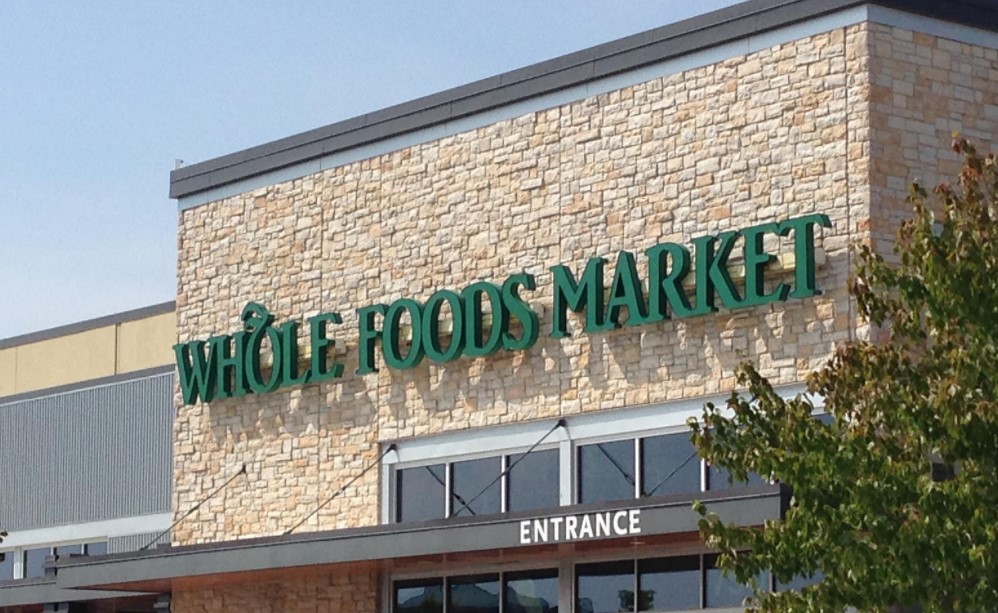
The grocery store business is now on a path of significant change in the wake of news that Amazon (AMZN) would acquire upscale organic grocer Whole Foods (WFM). The online retailing giant has wasted little time in resetting the product pricing environment at Whole Foods, and we expect that other grocers will have to follow. The group had already been on high alert given recent language from Kroger (KR), suggesting that it “won’t lose” on prices, but Amazon has the capacity to pursue loss-leading endeavors to really shake things up, as it has done in other industries. Per Amazon’s August 24 press release (bolded for emphasis):
“…the two companies (Amazon and Whole Foods) will together pursue the vision of making Whole Foods Market’s high-quality, natural and organic food affordable for everyone. As a down payment on that vision, Whole Foods Market will offer lower prices starting Monday (Aug 28) on a selection of best-selling grocery staples across its stores, with more to come.
In addition, Amazon and Whole Foods Market technology teams will begin to integrate Amazon Prime into the Whole Foods Market point-of-sale system, and when this work is complete, Prime members will receive special savings and in-store benefits. The two companies will invent in additional areas over time, including in merchandising and logistics, to enable lower prices for Whole Foods Market customers.
“We’re determined to make healthy and organic food affordable for everyone. Everybody should be able to eat Whole Foods Market quality – we will lower prices without compromising Whole Foods Market’s long-held commitment to the highest standards,” said Jeff Wilke, CEO of Amazon Worldwide Consumer. “To get started, we’re going to lower prices beginning Monday on a selection of best-selling grocery staples, including Whole Trade organic bananas, responsibly-farmed salmon, organic large brown eggs, animal-welfare-rated 85% lean ground beef, and more. And this is just the beginning – we will make Amazon Prime the customer rewards program at Whole Foods Market and continuously lower prices as we invent together. There is significant work and opportunity ahead, and we’re thrilled to get started.”
“It’s been our mission for 39 years at Whole Foods Market to bring the highest quality food to our customers,” said John Mackey, Whole Foods Market co-founder and CEO. “By working together with Amazon and integrating in several key areas, we can lower prices and double down on that mission and reach more people with Whole Foods Market’s high-quality, natural and organic food. As part of our commitment to quality, we’ll continue to expand our efforts to support and promote local products and suppliers. We can’t wait to start showing customers what’s possible when Whole Foods Market and Amazon innovate together.”
Here’s what will be new in Whole Foods Market stores on Monday (Aug 28) and what customers can expect over time as the two companies integrate:
Starting Monday (Aug 28), Whole Foods Market will offer lower prices on a selection of best-selling staples across its stores, with much more to come. Customers will enjoy lower prices on products like Whole Trade bananas, organic avocados, organic large brown eggs, organic responsibly-farmed salmon and tilapia, organic baby kale and baby lettuce, animal-welfare-rated 85% lean ground beef, creamy and crunchy almond butter, organic Gala and Fuji apples, organic rotisserie chicken, 365 Everyday Value organic butter, and much more.
In the future, after certain technical integration work is complete, Amazon Prime will become Whole Foods Market’s customer rewards program, providing Prime members with special savings and other in-store benefits.
Whole Foods Market’s healthy and high-quality private label products—including 365 Everyday Value, Whole Foods Market, Whole Paws and Whole Catch—will be available through Amazon.com, AmazonFresh, Prime Pantry and Prime Now.
Amazon Lockers will be available in select Whole Foods Market stores. Customers can have products shipped from Amazon.com to their local Whole Foods Market store for pick up or send returns back to Amazon during a trip to the store.
This is just the beginning – Amazon and Whole Foods Market plan to offer more in-store benefits and lower prices for customers over time as the two companies integrate logistics and point-of-sale and merchandising systems.
The press release from Amazon August 24 was telling of its plans with Whole Foods, and an outright price war in the grocery space seems to be just getting started. In a world already traditionally defined by “watching out for falling prices,” as Walmart (WMT) might advertise, the space may be in for a world of hurt in coming years. The most tell-tale sign of a company with what Warren Buffett might call an economic moat is pricing power, and the grocery store industry, which already operates on razor-thin margins, may see any moats that constituents might have become narrower in some cases and dry up completely in others. Economic returns/profits (EVA) in the grocery industry are under attack, and they will be for years to come. In an apparent counterattack, Target (TGT) has been the latest to announce price cuts in a blog post September 8 (bolded for emphasis):
If you love Target for incredible exclusive brands, super-chic collaborations and one-stop shopping for pretty much everything on your list, you’re going to really love this: We’ve lowered our prices on thousands of items, from cereal and paper towels to baby formula, razors, bath tissue and more.
Sure, there’s nothing like that victorious rush of nabbing a spectacular deal, but having to figure out what “As Advertised!” and “Temporary Price Cut” mean or waiting for just the right sale to roll around can be, well … super frustrating.
So, we’ve put our prices and promotions under the microscope. Our mission? To cut through the clutter and provide guests with great everyday value, while continuing to offer additional savings on the right products at the right times.
“We want our guests to feel a sense of satisfaction every time they shop at Target,” says Mark Tritton, Target executive vice president and chief merchandising officer. “Part of that is removing the guesswork to ensure they feel confident they’re getting a great, low price every day. We’ve spent months looking at our entire assortment, with a focus on offering the right price every day and simplifying our marketing to make great, low prices easy to spot, all while maintaining sales we know are meaningful to guests. And guests are taking note, appreciating much easier, more clear—and more consistent savings—at Target.”
Ready for a few tips for saving big every day at Target?
Fill your cart with confidence. Go ahead, choose from thousands of items, from milk and eggs to crayons, markers and more … and simply drop them in your cart. We’ve taken a close look at the products that are most important to our guests, making sure they’re priced right daily.
Watch for simple, easy messages. Say goodbye to all those little signs and ads letting you know about the “Weekly Wow!” or “Bonus Offer.” We’ve eliminated more than two-thirds of our price and offer call-outs so you can more easily spot the savings.
Delight in the right sales. Don’t worry—we’re not ditching promotions! We’re just making sure to offer only our best, most compelling sales—when it makes the most sense for our guests.
Here’s to even happier Target runs—and a break for your budget!
We think lower prices across the grocery space are great news for the consumer, but they’re not good for investors, from our perspective. We generally view groceries as somewhat less discretionary than other items, so we don’t expect too much of a demand response across the industry as a result of lower prices, only market share shifts, save for the general upward trend in purchasing as a result of the steadily-increasing population. Kroger’s second-quarter results, released September 8, may be most telling of what investors can expect among constituents going forward–reduced visibility and pressure on the operating line/margins (bolded for emphasis):
“FIFO operating margin on a rolling four quarters basis – excluding fuel, mergers and the adjustment items from the respective periods – decreased 53 basis points compared to the prior year.”
“As our business continues to improve, we remain committed to delivering on our guidance in 2017 and believe we have the ability to grow identical supermarket sales and market share in 2018. In this dynamic operating environment, we will continue to provide annual guidance as we have done for many years but will no longer provide longer-term guidance,” Mr. McMullen said.”
Truly the stock prices of no grocery store have been spared following news of the AMZN-WFM deal, and our general view is that this may be the beginning of considerable pain for lower-quality and higher-priced specialty retailers, entities such as Vitamin Shoppe (VSI), GNC Holdings (GNC) and Natural Grocers (NGVC), for example. Vitamin World, for one, filed for Chapter 11 protection September 11. Smart & Final Stores (SFS) and Weis Markets (WMK) may also find the current environment much more difficult, as larger players will have significantly greater resources to navigate a pricing war. Sprouts Farmers Market (SFM) seems to be facing the greatest pressure since the AMZN-WFM tie-up, however, but even shares of entities such as Ingles Markets (IMKTA) have experienced declines.
The dollar stores may be somewhat immune to the threats of AMZN-WFM, but we were surprised by the market’s reaction to newsletter portfolio idea Dollar General’s (DG) strong second-quarter results, released August 30. The company’s same-store sales advanced 2.6%, helping to propel net sales growth of 8.1% in the period, and it even raised the midpoint of its full-year 2017 diluted earnings guidance, now in the range of $4.35-$4.50 from $4.25-$4.50. It was a classic beat-and-raise quarter that should have been met with some excitement, but we think the market instead is beginning to take pressures on gross margins seriously. In Dollar General’s second quarter, for example, its gross profit margin fell 47 basis points from the same period a year-ago, and this before what could become one of the biggest pricing wars an industry has yet seen. We’re watching underlying fundamentals at Dollar General like a hawk.
The AMZN-WFM tie-up has changed the game across the grocery value chain, with implications not only on food retailers, but also on food distributors and food manufactures as well. As Amazon seeks to squeeze its rivals’ profit margins even further, it’s hard to believe that the distributors and food makers won’t feel the pinch either. It’s far too early to tell how the long term may evolve, perhaps echoing Kroger’s decision to no longer issue long-term guidance, but we expect the value pie (potential industry earnings) to shrink in the intermediate-term, not grow. Sticking with the strongest retailers and those least impacted by pricing pressure (the dollar stores) may be the best way to retain exposure to the food retailing space, if preferred, but no grocer may be able to navigate through the ensuing pricing war completely unscathed, in our view.
Food Retailers: CASY, COST, CVS, GNC, KR, SVU, SYY, TGT, UNFI, VSI, WBA, WFM, WMT