
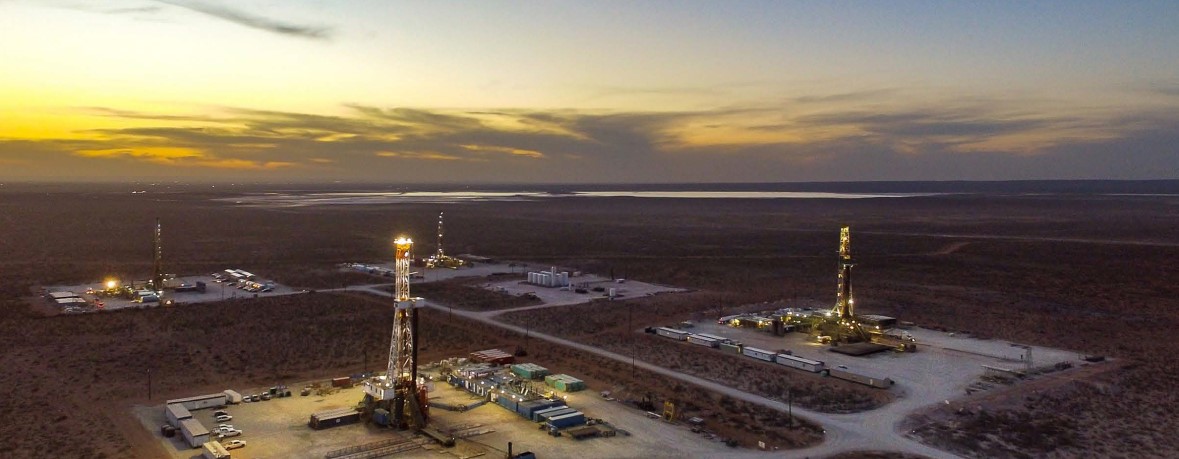
Image Source: Exxon Mobil Corporation – IR Presentation
By Callum Turcan
Earnings Coverage by Ticker: BP, COP, CVX, RDS.A/RDS.B, TOT, XOM
Let’s look at the Oil Majors that have recently reported earnings.
BP’s Upstream Operational Execution Remains Strong
On July 30, BP plc (BP) reported non-GAAP flat year-over-year underlying replacement cost profit of $2.8 billion in the second quarter of 2019. Marginal reductions in operating income from its upstream and downstream segments were offset by a reduction in corporate-level expenses. BP owns a 19.75% stake in Rosneft (OJSCY) which saw earnings move lower in the second quarter by an estimated ~25%. Unlike its peers who generally reported significant weakness at their downstream operations (refining, petrochemicals, marketing, and retail operations), BP’s downstream performance held up nicely all things considered as that segment’s income was down only $0.1 billon (~7%) year-over-year as the company performed planned maintenance activity. On a sequential basis management mentioned that BP realized stronger refining margins (“crack spreads”), along with solid growth at its lubricants and fuels marketing segments. Mexico represents a major growth opportunity for BP’s fuels marketing business.
Please note that over the past several years, BP’s upstream operational execution has been excellent. Strong operational execution enabled BP to bring new production streams online at a rate fast enough to offset mature declines elsewhere. BP’s upstream production stood at 3.8 million BOE/d (“barrels of oil equivalent per day”) in the second quarter, up 4% year-over-year as BP completed developments in the UK North Sea, Egypt, Trinidad, and the US Gulf of Mexico. Rising upstream volumes from conventional projects with significantly lower decline rates than unconventional (“fracking”) assets will help BP grow its future cash flows, keeping volatile raw energy resource price realizations in mind. When/if raw energy resource prices should rise materially, BP can leverage its recently acquired short-cycle unconventional assets in the US from BHP Group (BHP) to capitalize on such an event. Check out BP’s 16-page Stock Report—->>>>>>
Unconventional Leading the Way at ConocoPhillips
On July 30, ConocoPhillips (COP) reported flat GAAP earnings of $1.6 billion as its diluted EPS climbed by one penny to $1.40 in the second quarter of 2019. The firm’s upstream production (excluding its volatile Libyan segment) grew by 79,000 BOE/d versus the same period last year, clocking in at 1.3 million BOE/d. ConocoPhillips’ Libyan output stood at 42,000 BOE/d as the firm owns ~16% of the Waha Concession, which produces oil through upstream operations in the Sirte Basin. Unconventional led the way with ConocoPhillips’ Permian, Eagle Ford, and Bakken/Three-Forks output up 26% year-over-year. Production growth offset weaker realized raw energy resource prices, allowing for ConocoPhillips to keep its net income flat. At the end of the second quarter, ConocoPhillips had a net debt load of $8.3 billion (inclusive of short-term debt and marketable securities), which doesn’t include its $1.8 billion strategic stake in Cenovus Energy Inc (CVE). Check out ConocoPhillips’ 16-page Stock Report—->>>>>>
Chevron Pockets Large Breakup Fee
On August 2, Chevron Corporation (CVX) reported $2.27 in GAAP diluted EPS in the second quarter of 2019 on $38.9 billion in revenue as the company pocketed a large breakup fee from Anadarko Petroleum Corporation (APC), which is now being acquired by Occidental Petroleum Corporation (OXY) instead of Chevron. We covered that story in detail here.
Chevron’s GAAP earnings of $4.3 billion in the quarter included the net $0.7 billion cash infusion from Anadarko and a $0.2 billion non-cash gain due to a reduction in Alberta’s corporate income tax rate. The Oil Major’s upstream operating segment saw earnings grow by $0.2 billion year-over-year due to strong performance in the US (surging unconventional Permian volumes, solid base maintenance execution in the Gulf of Mexico), rising volumes from the Wheatstone LNG development in Australia, and the Albertan tax benefit. On the downstream front, Chevron’s segment income dropped by $0.1 billion year-over-year as weak domestic performance was offset by stronger international performance. Check out Chevron’s 16-page Stock Report—->>>>>>
Shell Hurt By Weaker Downstream Margins
On August 1, Royal Dutch Shell plc (RDS.A) (RDS.B) reported a 50% drop in its second quarter 2019 earnings on a GAAP basis, which fell down to $3.0 billion. Rising corporate-level expenses combined with global LNG prices taking a nose-dive this year (Shell’s future rests in large part on its major investments in LNG export infrastructure) put a tremendous amount of pressure on its financial performance. Shell has been experimenting with new LNG pricing formulas, including coal-linked schemes, in order to appease customers who have grown irritated with oil-linked formulas given how low spot LNG prices have gone. Due to significantly weaker downstream margins, Shell’s downstream operating income fell by ~24% year-over-year. In particular, refining and chemical margins in Asian markets took a beating.
Pivoting to Shell’s cash flow statement, free cash flows for the first six months of 2019 came in at $9.4 billion, which fully covered $8.0 billion in total dividend payments during this period. Additionally, Shell announced that it had launched the next tranche of its share buyback program which is targeting $2.75 billion in buybacks through October 2019 (the previous program saw $9.25 billion worth of shares repurchased from July 2018 to July 2019).
Total Faced Income Pressure
On July 25, the French Oil Major Total SA (TOT) reported $1.2 billion in non-GAAP adjusted income (down 19% year-over-year) and non-GAAP adjusted EPS of $1.05 (down 20% year-over-year) in its second quarter of 2019 earnings report. The start-up of major projects in Angola and the UK North Sea helped offset some of the pressure from sharply lower raw energy resource prices. On the natural gas and LNG front, Total reported gas prices in Northwest Europe and Japan both fell by 44% year-over-year during the second quarter. Upstream volumes rose by 9% year-over-year to 3.0 million BOE/d, with two-thirds of that growth weighted towards natural gas. Keep in mind operations at the US Cameron LNG export facility started up last May, which Total owns ~17% of, as that will see the firm’s LNG production grow at a very inopportune time.
Total’s downstream segments posted year-over-year declines in operating income due to lower throughput volumes and weaker crack spreads in Europe. Oil Majors with a lot of LNG exposure had a rough second quarter as a traditional source of stability, downstream operations, saw their margins come under intense pressure. If Occidental is successful in acquiring Anadarko, Total has entered into an agreement with Occidental to acquire Anadarko’s African assets for $8.8 billion, which includes a stake in a massive LNG development in Mozambique. Check out Total’s 16-page Stock Report—->>>>>>
Exxon Experienced Weakness in its Downstream Operations
On August 2, Exxon Mobil Corporation (XOM) reported $3.1 billion in GAAP net income on $69.1 billion in revenue in the second quarter of 2019. Respectively, the Oil Major’s earnings and revenue were down 21% and 6% from the same period last year. Weakness at Exxon Mobil’s refining/downstream operations (segment operating income was down $1.5 billion due to weak crack spreads and maintenance expenses) and petrochemical operations (segment operating income was down $1.2 billion year-over-year due to severe margin contraction and downtime costs) weighed negatively against strong performance at its upstream division.
During the second quarter, Exxon Mobil’s upstream production grew by 117,000 BOE/d as its unconventional Permian output shot up ~90% year-over-year. That saw its upstream segment’s operating income grow by $0.2 billion as higher volumes offset weaker raw energy resource prices. We caution that Exxon Mobil’s main source of stability, its downstream and petrochemicals operations, have been underperforming so far this year and that’s worrisome. By 2020, first-oil from the Exxon Mobil-led Liza 1 upstream project in offshore Guyana is expected, which should mark the beginning of an impressive oil export growth story in the small South American nation. Check out Exxon Mobil’s 16-page Stock Report—->>>>>>
Looking Ahead
Global raw energy resource prices have plunged lower as concerns over the US-China trade war and the possibility a global synchronized slowdown in economic growth are beginning to emerge. We will be monitoring the situation closely going forward.
Oil & Gas Majors Industry – BP COP CVX RDS.A RDS.B TOT XOM
Related: XLE, VDE, USO, OIL
—-
Valuentum members have access to our 16-page stock reports, Valuentum Buying Index ratings, Dividend Cushion ratios, fair value estimates and ranges, dividend reports and more. Not a member? Subscribe today. The first 14 days are free.
Callum Turcan does not own shares in any of the securities mentioned above. BP plc (BP) is included in Valuentum’s simulated High Yield Dividend Newsletter portfolio. Some of the companies written about in this article may be included in Valuentum’s simulated newsletter portfolios. Contact Valuentum for more information about its editorial policies.