
Image Source: Neil Conway
When our team presented at the CFA Society of Houston in March 2017, we warned about the possible coming pressures on consumer staples stocks, and so far, our concerns have come to fruition. Not only have a number of high-profile players in the tobacco and beverage arena soured, but household consumer products and packaged foods players have felt the pain, too. Campbell Soup’s recent fallout has been among the worst. Shares have been halved since mid-2017.
Download slide deck — March 8, 2017: Trust the Numbers, Not Just Management, CFA Society Houston, Kris Rosemann and Brian Nelson, CFA
By Brian Nelson, CFA
The consumer staples sector, as measured by the Consumer Staples Select SPDR ETF (XLP), has faced considerable pressure of late, as big disappointments at Philip Morris (PM), which has impacted Altria (MO) in sympathy, weak quarterly performance from Procter & Gamble (PG) and generally lackluster results from Coca-Cola (KO) have weighed on the sector. The price of the Consumer Staples Select SPDR ETF has fallen more than 14% from late January 2018, trailing the market by more than 10 percentage points over that time. Since the beginning of 2017, the market has advanced more than 20%, while consumer staples shares, as measured by State Street’s XLP ETF, have fallen ~4%, revealing ~24 points of underperformance.
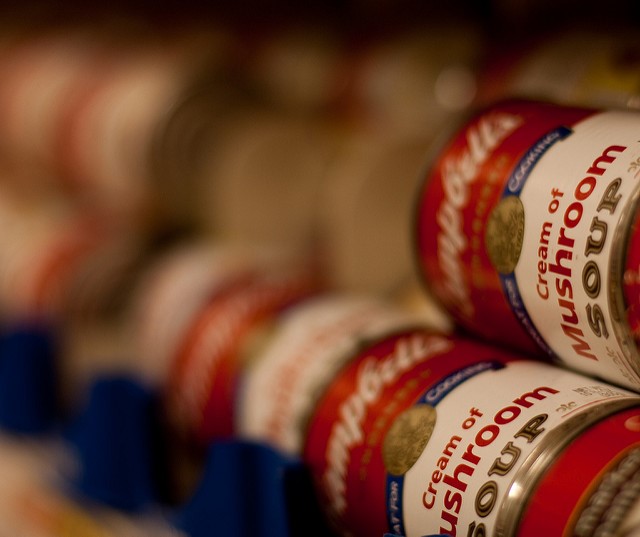
The latest blow to the traditionally-resilient consumer staples group came from Campbell Soup (CPB), which reported highly-disappointing fiscal third-quarter results May 18, news that coincided with the retirement of Denise M. Morrison from the CEO position at the soup maker. Shares of Campbell Soup have been halved since they peaked at nearly $70 in mid-2017, a nightmare for the executive team and holders of shares. Net sales at Campbell Soup increased 15% in its fiscal third quarter (ends April) thanks to the purchase of Snyder’s-Lance, but adjusted operating income advanced just 1%. Echoing the concerns we said about pricing pressures in early 2017, “Consumer Staples: Product Pricing Gains to Wane…,” Campbell Soup noted that gross-margin performance came in below expectations.
Shockingly, Campbell Soup’s gross margin fell to 29.1% in the fiscal third quarter of 2018 from 35.9% in the year-ago period. Even after excluding items to improve comparability, its gross margin still contracted 3.9 percentage points as pricing/promotional pressures, cost inflation, and higher supply chain costs weighed on profitability. Campbell Soup lowered its fiscal 2018 earnings guidance during its third-quarter report, too, a rather surprising development so late into the company’s fiscal year, and we think the troubles won’t subside anytime soon. Adjusted EBIT is now expected to be down 9%-11% (negative 9%-11%) from expectations of a 5%-7% decline (negative 5%-7%) during the fiscal year.
It’s not all dire at Campbell Soup, however. The company’s operating cash flows advanced to $1.02 billion during the first nine months of its fiscal year from $1 billion during the same period last year. Capital spending remains controlled, though the measure did advance in the same year-over-year nine-month period, too, but free cash flow continues to cover cash dividends paid by a multiple. What is most concerning to investors of Campbell Soup, however, is the company’s debt load, which exploded higher as a result of acquisitive activity, with total debt now standing at $9.8 billion at the end of April 2018 against a cash and cash equivalents balance of less than $200 million. Campbell Soup is now a story of gross-margin pressures and too-much leverage, and its 4% dividend yield isn’t high enough to tempt us.
Procter & Gamble’s quarterly results revealed evidence of pricing pressures and sent shockwaves through the household consumer products group, hurting shares of Clorox (CL), Kimberly-Clark (KMB), Church & Dwight (CHD), Colgate Palmolive (CL) and others, and now Campbell Soup’s outlook did the same to the packaged foods space, drawing selling pressure at General Mills (GIS), J.M. Smucker (SJM), Kellogg (K) and others. Though some entities have pointed to concerns about increased costs from potential tariffs, increased pricing pressures and higher promotional expenses are likely the primary reasons. We’re not looking to add exposure to the consumer staples sector in any simulated newsletter portfolio at the moment.
—–
Valuentum members have access to our 16-page stock reports, Valuentum Buying Index ratings, Dividend Cushion ratios, fair value estimates and ranges, dividend reports and more. Not a member? Subscribe today. The first 14 days are free.
Brian Nelson does not own shares in any of the securities mentioned above. Some of the companies written about in this article may be included in Valuentum’s simulated newsletter portfolios. Contact Valuentum for more information about its editorial policies.