
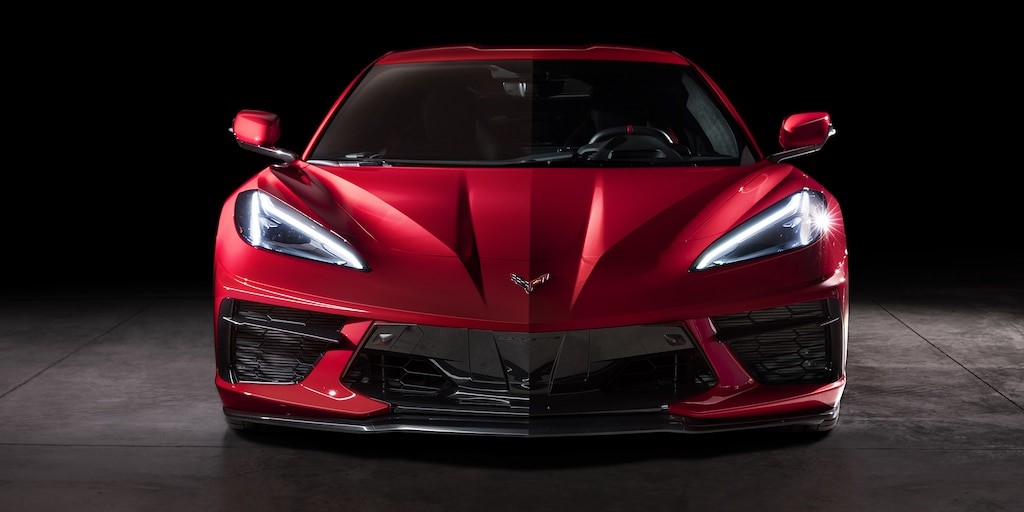
Image Source: GM Chevrolet Next-Generation Corvette, 2020 Stingray revealed July 18
Shares of General Motors held up well in an otherwise weak market August 1 after posting a solid second quarter 2019 earnings report.
By Callum Turcan
A holding in both our Dividend Growth Newsletter and Best Ideas Newsletter portfolios, General Motors (GM) held up well August 1 after reporting a nice earnings beat with revenue coming in-line with consensus analyst estimates. GM’s North America division led the way, aided by its all-new Chevrolet Silverado and GMC Sierra offerings taking market share in the pickup truck market (according to third-party data cited by GM). GAAP revenue declined by 2% year-over-year and non-GAAP adjusted EBIT moved lower by 6%, but GM’s non-GAAP adjusted EPS of $1.64 was $0.19/share higher than expected. Shares of GM yield 3.7% as of this writing.
Operational Update
We continue to like GM’s expansion plans for the light duty truck market (pickup trucks, crossovers, and SUVs), which is significantly more profitable than sales of passenger cars in most circumstances. Its stake in self-driving company Cruise provides for a long-term growth tailwind as the world of automation undergoes one of the biggest disruptions seen since the invention of the internal combustion engine.
The goal is to have AI and machine learning technology merge with electric vehicle technology to create a comprehensive self-driving EV offering. Cruise has several big backers including T. Rowe Price Group Inc (TROW), SoftBank Vision Fund (SFTBY), and GM’s automotive partner Honda Motor (HMC). GM plans to ramp up Cruise’s testing and validation activities in San Francisco in order to eventually “deploy a fully driverless service” in the city. After raising an additional $1.15 billion in May, bringing the valuation of Cruise up to $19.0 billion, the venture has the funds to continue making major investments. Cruise noted that it owns 40% of the fast EV charging stations in San Francisco with more likely on the way. The vehicles are being built in Warren, Michigan, by engineers from Honda, GM, and Cruise.
Back on June 12, GM mentioned reported that it was investing an additional $150 million into its Flint assembly plant in Michigan to produce greater amounts of pickup trucks like the Chevrolet Silverado. Overall in North America, GM maintained flat market share on a year-over-year as strength at its pickup truck and crossover offerings mitigated weakness at its passenger car sales. GM is closing several North American assembly plants that are primarily set up to produce passenger cars for this reason.
The American auto market has plateaued in terms of unit volume and is likely to move lower in the medium-term as economic activity slows down. On top of that, light duty trucks (pickups, SUVs, crossovers) have been steadily taking market share away from passenger vehicles in America over the past several years. GM wants to shift its production capacity toward facilities geared towards light duty trucks, which are more profitable and in high demand, and is actively making investments in those facilities. That includes $24 million at GM’s Fort Wayne assembly plant in Roanoke, Indiana, the aforementioned Flint investment, and $20 million at its Arlington plant in Texas, all of which are geared towards expanding GM’s ability to make light duty trucks.
America’s shift towards light duty trucks is partially a product of the shale boom putting downward pressure on petroleum product prices. It’s much easier to justify getting a bigger vehicle with worse fuel efficiency (keeping in mind major gains have been made in this space) when consumers are confident gasoline and diesel prices will stay below $4/gal in most markets for an extended period of time (certain regional markets, like California, are a different story).
Financials
Company-wide, GM generated $3.0 billion in adjusted EBIT during the second quarter of 2019, down ~6% from last year’s levels. Sales in China were down 100,000 year-over-year during the second quarter, reducing that segment’s EBIT generation by $0.4 billion and weighing heavily against GM’s international performance which produced $0.0 billion (zero) in EBIT last quarter. North American EBIT generation rose by $0.3 billion year-over-year to $3.0 billion as the shift towards light duty trucks enabled GM’s North American division to realize a nice adjusted EBIT margin of 10.7% in the quarter. GM Financial’s EBIT stayed flat at $0.5 billion. As Cruise increased its staff size from 40 to 1,500, GM Cruise’s losses grew which is to be expected as the venture gets ready to enter the next phase of development.
Due to GM Financial, GM’s balance sheet is a messy read. GM Automotive had $16.0 billion in total debt at the end of June 2019 versus $17.5 billion in cash, cash equivalents, and marketable securities. However, when factoring in the massive debt load of GM Financial (inclusive of short-term debt) at the end of June, we caution that the firm is still rather leveraged (typically, balance sheet debt associated with a lending arm is not treated as net debt within the enterprise valuation construct, but rather the lending arm is valued separately, often on a price-to-book basis). Management mentioned that GM Automotive generated $2.5 billion in adjusted free cash flow in the second quarter.
Our unadjusted Dividend Cushion ratio stands at 1.3x and when adjusting for GM’s messy financials, that rises to 3.4x providing for Excellent dividend coverage. GM’s future payout growth trajectory is also promising, keeping in mind that its financial performance is heavily exposed to cyclical markets (and that GM Financial could be a hindrance during broader economic weakness). Trade wars and the impact tariffs have on both the micro (input cost inflation) and macro (total vehicle sales worldwide and in North America) side pose risks to GM’s short- and medium-term performance that need to be kept in mind.
Concluding Thoughts
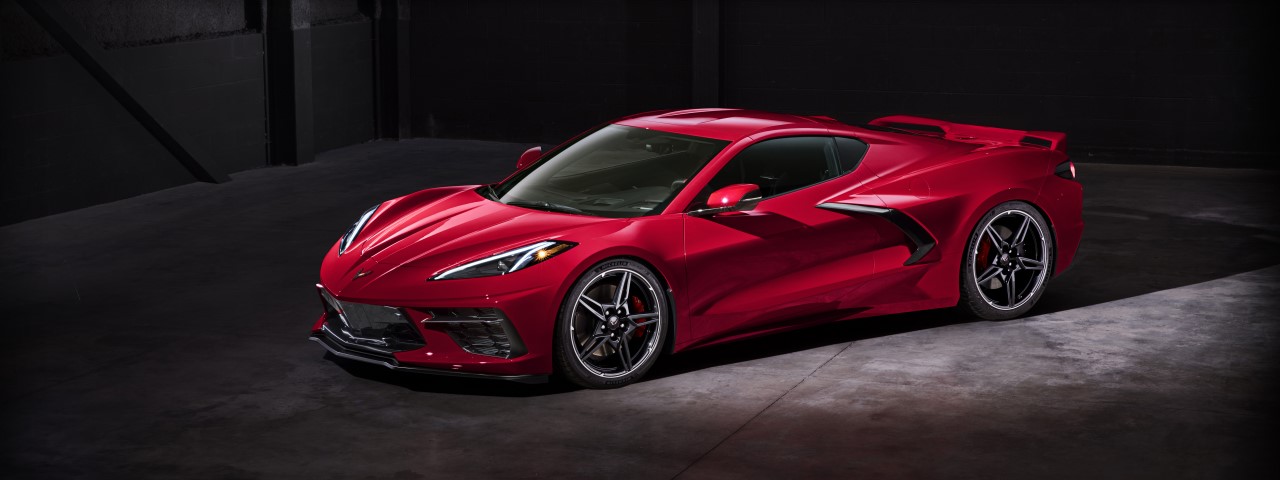
Image Source: Chevy media
We liked GM’s second-quarter report, and we are reiterating our fair value estimate at $49 per share. If GM can continue to gain market share in the US pickup market, that can make the different between GM trading at the low end of our fair value estimate range ($37/share) or the high end ($61/share), keeping downside risks in mind (i.e. falling GM China sales). Cruise continues to offer a compelling long-term tailwind to GM’s forecasted financial performance over the years and decades to come, and we must say that the new Corvette is quite sharp looking.
Auto Making Industry – F GM HMC HOG TM TSLA
Related: CARZ
—–
Valuentum members have access to our 16-page stock reports, Valuentum Buying Index ratings, Dividend Cushion ratios, fair value estimates and ranges, dividend reports and more. Not a member? Subscribe today. The first 14 days are free.
Callum Turcan does not own shares in any of the securities mentioned above. General Motors Company (GM) is included in Valuentum’s simulated Dividend Growth Newsletter and Best Ideas Newsletter portfolios. Some of the companies written about in this article may be included in Valuentum’s simulated newsletter portfolios. Contact Valuentum for more information about its editorial policies.