
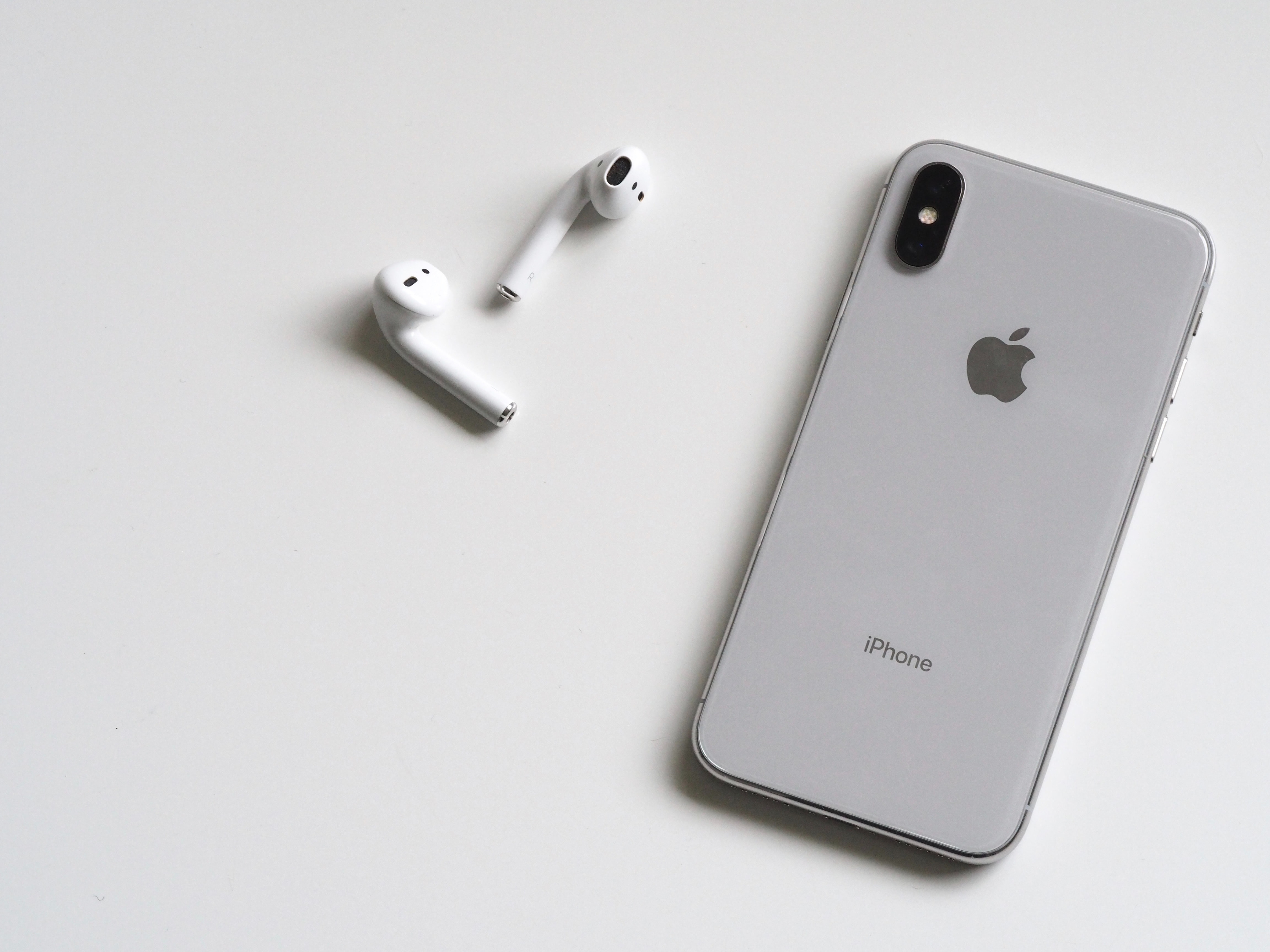
Image Source: John Jones
Apple’s fiscal fourth quarter report was one of ongoing momentum in many areas, but the investing community has taken great issue with its decision to stop reporting quarterly updates on unit sales of iPhones, iPads, and Macs.
By Kris Rosemann
Simulated newsletter portfolio holding Apple’s (AAPL) fiscal fourth quarter report, released November 1, has been a subject of even greater attention than usual for the largest company by market cap after it announced it would no longer disclose quarterly unit sales data for the iPhone, iPad, and Mac. We can’t say that we are fans of transparency levels declining, but we will not be joining the masses in blasting Apple for the move.
Nevertheless, investors are reading into the decision as a defensive move as iPhone revenue growth has become predicated on rising selling prices, and expectations for unit sales weakness in the near to mid-term have become increasingly more prevalent since the announcement. Management was quick to point to the fact that its largest competitors do not provide such granular data, but investors and analysts were not satisfied. Shares have faced notable selling pressure since the release, but CFO Luca Maestri defended the move as follows on the earnings conference call:
“When you look at our financial performance in recent years, take the last three years, for example, the number of units sold during any quarter has not been necessarily representative of the underlying strength of our business. If you look at our revenue, given the last three years, if you look at our net income during the last three years, if you look at our stock price here in the last three years, there’s no correlation to the units sold in any given period.”
Apple’s fiscal fourth quarter was filled with highlights, including 29% year-over-year growth in iPhone revenue, driven by average selling price growth as units were flat. Softness in select emerging markets is providing some macroeconomic-based uncertainty for the company, particularly in Turkey, India, Brazil, and Russia, but China has not yet been a point of weakness. Wearables revenue leapt more than 50% from the year-ago period, and the quarter was the best ever for ‘Services’ revenue, which hit the $10 billion mark for the first time and is on track to reach its goal of doubling by 2020 from 2016 levels. En route to 27% year-over-year services revenue growth, all-time revenue records were set for the App Store, cloud services, AppleCare, Apple Music, and Apple Pay, and paid subscriptions across its ecosystem finished the quarter at more than 330 million.
In a testament to its Services growth, Apple is quick to point out that Apple Pay is now supported at 71 of the top 100 merchants across the US and at 60% of all US retail locations. The service is the leading mobile contactless payment service provider in the world, and transaction volume tripled in its fiscal fourth quarter from the year-ago period, which comes at a time when competition is only ramping.
Gross margin came in at 38.3% for Apple in the quarter, which was flat sequentially and up from 37.9% in the year-ago period as leverage from higher revenue offset seasonal transition costs. Operating income grew nearly 23% on a year-over-year basis, and the company reported September quarter records for net income, earnings per share, and cash flow from operations, which came in at $14.1 billion, $2.91, and $19.5 billion, respectively.
Free cash flow generation at Apple remained impressive in the full year fiscal 2018 as cash flow from operations leapt more than 20% from fiscal 2017 to $77.4 billion, driving free cash flow to $64.1 billion, 23.8% higher than fiscal 2017 levels. Cash dividends paid in the year came in at $13.7 billion, but the company repurchased more than $72.7 billion worth of its own shares as management works to take its fortress-like balance sheet to a cash-neutral position over time. As of the end of fiscal 2018, Apple held $237.1 billion in cash, cash equivalents, and marketable securities compared to $114.5 billion in total debt. This $122.6 billion net cash position compares to a net cash position of $153.2 billion a year earlier.
All things considered, we’re not jumping ship on Apple. The company continues to execute well, and its next massive growth opportunity is not likely to come from the iPhone family. However, the product line will continue to be the driver of its cash-rich business as it continues to develop other product lines and foster robust growth in its ‘Services’ business, which continues to prove the connection the company’s ecosystem has to the everyday lives of consumers. This is a connection point that is not going away anytime soon, even if iPhone unit sales may plateau.
—–
Valuentum members have access to our 16-page stock reports, Valuentum Buying Index ratings, Dividend Cushion ratios, fair value estimates and ranges, dividend reports and more. Not a member? Subscribe today. The first 14 days are free.
Kris Rosemann does not own shares in any of the securities mentioned above. Some of the companies written about in this article may be included in Valuentum’s simulated newsletter portfolios. Contact Valuentum for more information about its editorial policies.