
Image Source: Lr43_L1000009
By Kris Rosemann
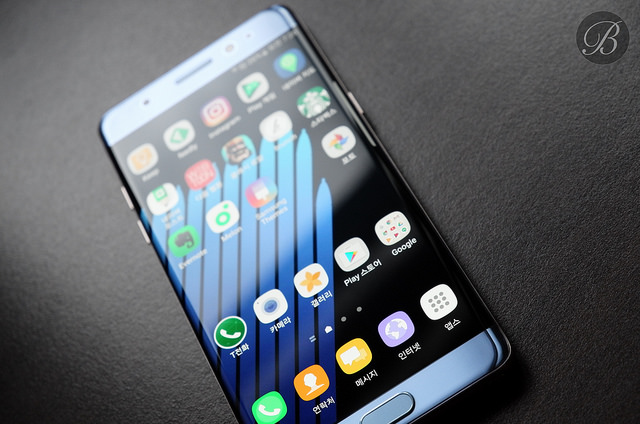
Samsung’s (SSNLF) issues with its Galaxy Note 7 smartphone began in late August when the firm postponed shipments of the smartphone due to product quality testing. The event was not a major issue, as early demand for the device had outpaced supply, already causing shipment delays to some markets. Shortly after the delay was announced, claims of the smartphones’ batteries exploding surfaced, and Samsung subsequently announced it would recall Galaxy Note 7s across the globe.
The recall announcement only began the saga of despair for the Galaxy Note 7 series. One week later, the FAA issued a warning that the devices could be an airborne fire hazard and suggested consumers refrain from using the smartphones on airplanes altogether. The Consumer Product Safety Commission also urged consumers to power down their Galaxy Note 7s and discontinue device charging.
Though the process was initially expected to cost the firm more than $1 billion in total, Samsung appeared to be on track with its recall of all Galaxy Note 7s in early October until a replacement device overheated and caused a plane evacuation in Louisville, Kentucky. A total of three replacement phones were reported to have caught fire in the span of a week, and the Korean smartphone maker subsequently suspended production and sales of the Note 7 after US mobile carriers such as AT&T (T), Sprint (S), and T-Mobile (TMUS) stated they would stop issuing the devices. Samsung has since halted production of the embattled devices permanently.
The recall and later ceasing of production of the Galaxy Note 7 is now expected to result in roughly $4 billion in in costs and sales lost. Such a loss in the midst of an intense update cycle battle with Apple (AAPL), who recently released the iPhone 7, has caused material share price erosion and forced Samsung to slash its third quarter 2016 profit guidance by one third. If such forecasts are accurate, the firm is in danger of reporting its first operating loss in its mobile division since 2011, before the Galaxy Note franchise was introduced.
Some estimates expect Apple to gain approximately 8 million additional unit sales of the new iPhone 7 as a result of Samsung’s woes; iPhone 7 shipments in 2016 were initially expected to be in the range of 70-75 million. More important than the near-term bump in demand for the iPhone 7 is the impact Samsung’s missteps will have on the long-term share battle in the smartphone market.
Brand loyalty is a key advantage in a consumer facing end market, and Samsung appears to have damaged, at least to a degree, its level of trust with consumers. Apple has a chance to convert millions of former Galaxy users into loyal Apple consumers. In addition to the share growth potential in the smartphone market, Apple stands to benefit from a boost in its installed base of users, making its ecosystem increasingly stronger as its competitor suffers.
While all of this is taking place on the consumer front of the smartphone market, Apple and Samsung continue their legal battle as well; the US Supreme Court is set to determine the amount Samsung owes Apple for iPhone copying. Samsung has already been found to have infringed upon the iPhone’s design, but the issue remains whether it owes Apple all or merely a portion of the profits from the phones that benefited from iPhone design features.
The case will be the first design patent case the US Supreme Court will hear in over 100 years, and a number of companies, in tech and beyond, have weighed in on the matter, many siding with Samsung. Facebook (FB), Google (GOOG, GOOGL), Hewlett Packard (HPQ), and Dell are among those who feel the decision is of “enormous practical importance” to them. It is worth noting that a lower court ruled in favor of Apple in 2012 to the tune of $930 million in profits, an amount that was later reduced.
While payments in the hundreds of millions of dollars is relatively immaterial for one of the world’s largest electronics company, if Samsung is forced to reconfigure certain aspects of its smartphones in order to avoid meaningful penalties related to future patent infringements, it could result in additional consumer discomfort surrounding its devices. Apple will take every opportunity it can to crack into Samsung’s share in the smartphone market.
Though we’re never happy when consumers are put at risk by failing products, we love what the recent developments surrounding Apple’s largest rival mean for the tech giant’s long-term positioning in the smartphone market. We’re happy to have held on to our positions in Apple in both newsletter portfolios throughout weakness in shares and largely negative sentiment that has surrounded the stock for a large portion of 2016, and we will continue to do so for the foreseeable future.