This article appeared on Seeking Alpha. Please view disclosures: https://seekingalpha.com/article/277905-under-armour-solid-company-but-shares-are-significantly-overvalued
We wanted to provide subscribers with our thoughts on Under Armour (UA). Although we expect the company to follow Nike’s excellent results and post solid performance in its second quarter, the shares look significantly overvalued to us in the $75-$80 range. The risk-reward balance is not in investors’ favor at these levels.
Apparel Remains Strong…
If we can gather anything pertinent about Under Armour from Nike’s (NKE) earnings released Monday, we can see that athletic apparel, specifically in North America, is on fire. Year-to-date, Nike’s North American apparel sales are up 21%, including a second-quarter surge of 28%. This is consistent with the apparel growth we’ve seen at Adidas (ADDYY.PK) and Lululemon (LULU).
Under Armour, with a smaller base than Nike, may grow even faster. We expect apparel to be up around 35% for its second quarter, and a little over 32% for the year. The introduction of its “Charged Cotton” product went smoothly, and we think CEO Kevin Plank will make some bullish statements about its success in the next conference call. The product has remained a hot seller at The Sports Authority and Dick’s Sporting Goods (DKS). And while it may cannibalize regular cotton t-shirt sales, the additional five dollars per shirt should more than make up for it.
Our channel checks have to some extent confirmed its strong presence in apparel. The only signs of the bread-and-butter heat gear or cold gear are obscure colors, in our view, which we take as a positive. The blacks, blues, and whites of the world seem to be in short supply. The only negative we see is in apparel is in basketball items, which remains sitting on shelves at half-price at a number of retailers, as consumers flock towards Nike and Adidas products.
…But Footwear Looks Bleak
Long-time followers of UA may recall that CEO Plank thinks the company’s future will make it bigger than Nike. He even said that he expects UA to be the biggest brand in basketball footwear, though he gave no definite timeline.
However bullish Plank may be, the company’s first steps have been a miss. For example, at Footlocker (FL), the nation’s largest premier athletic footwear retailer, the walls are covered in Nike, Adidas, Asics, and even Collective Brand’s Saucony. Garnering less exposure are Under Armour’s Micro G basketball shoes. Technically speaking, the shoes don’t seem offensive or to be poorly made, as they are consistently given great ratings by shoe experts. However, Under Armour’s selling strategy doesn’t appear to be connecting with customers.
The company has chosen to ride the coattails of Brandon Jennings, a point guard for the Milwaukee Bucks whose stats at this point in his career are far from superstar level. We think building an elite basketball brand requires elite talent, and unless they throw the bank at a superstar of LeBron James or Kobe Bryant’s caliber, we think they will struggle to compete with the Nike and Adidas duopoly.
Under Armour Must Protect Their House, But It’s Time to Look Outside of It
In order to join the elite sports apparel companies of the world, Under Armour needs greater exposure outside of the United States. Though we applaud the company for growing revenues outside of North America by 36% last year, the sales still represent less than 15% of the company’s total revenues. On the other hand, Nike does about 65% of its sales outside of the US.
What particularly worries us is Under Armour’s difficulty in gaining traction in Europe. Though the firm has signed some key contracts with top-level European soccer teams, we fear that the company lacks a cohesive strategy to establish itself as a prominent brand in that region. We continue to watch developments in Europe closely, however.
We Think Under Armour’s Shares Are Significant Overvalued
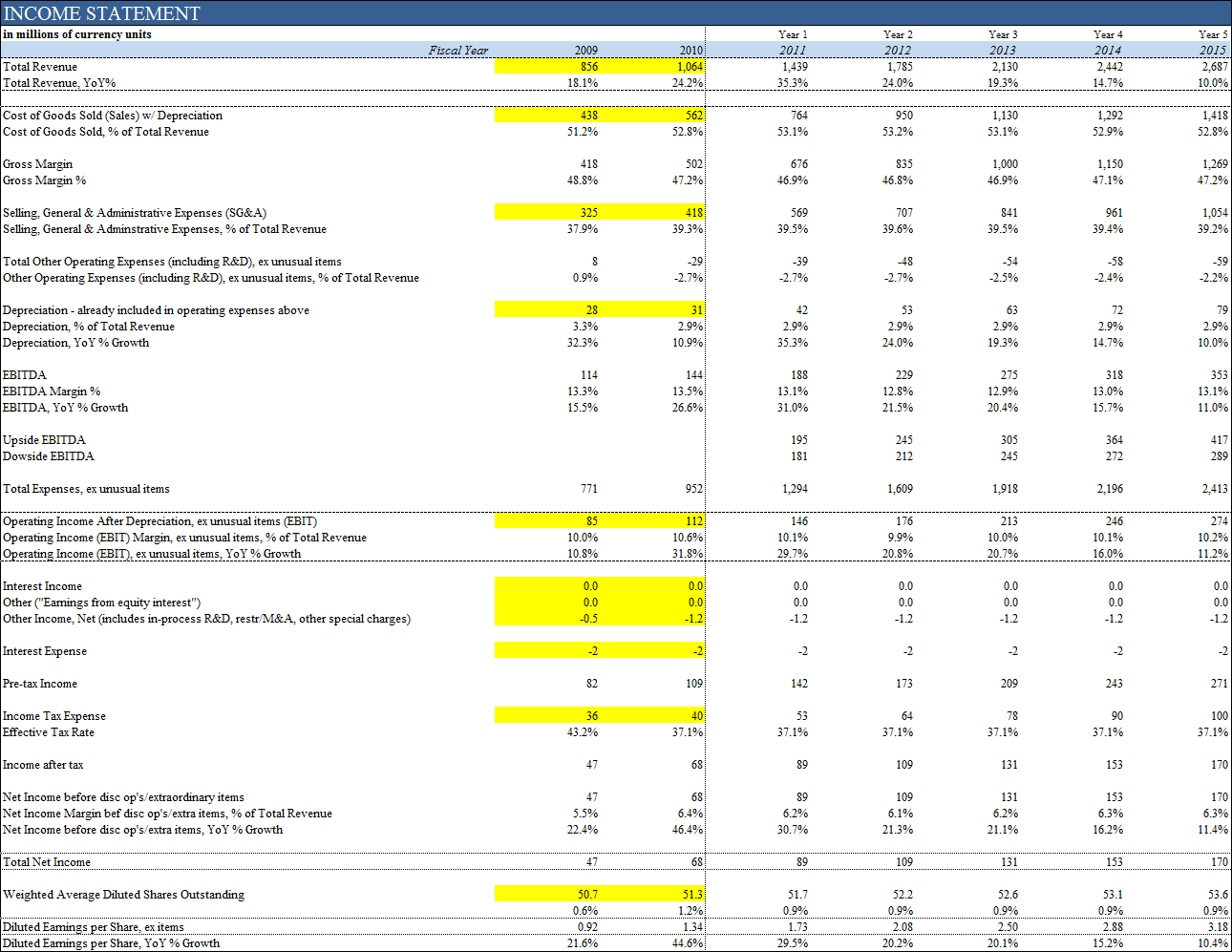
On a discounted cash flow basis, shares of Under Armour look overvalued. Our upside scenario, for example, suggests the firm is worth just barely above $50 per share, or about 25x fiscal 2012 earnings. Under Armour only last year reached $1 billion in sales, and some improvements in marketing and a continued premium price point product may continue to propel Under Armour past near-term expectations.
But at its current levels, we think investors should avoid Under Armour’s shares. For one, a significant build in inventory or even a slight miss versus street estimates could send the shares down quickly, and we do not agree with the long-term growth rates the market has priced in to the stock. The risk-reward balance is not in investors’ favor. Further, we expect Under Armour to suffer some of the same margin pressures that Nike did (gross margins were down over 300 basis points), and we think the company’s growth strategy won’t allow them to leverage SG&A nearly as effectively.
Please view below our income-statement forecasts, which translate into a fair value on a DCF basis significantly below current price levels in the $75-$80 range. We view our forecasts for Under Armour as quite bullish (nearly $2.7 billion in revenue and over $3 in earnings power by 2015), but this doesn’t get us excited about owning the firm’s stock. We’d like to see some serious strides in footwear and international sales before we’d grow more constructive on the firm’s valuation.