
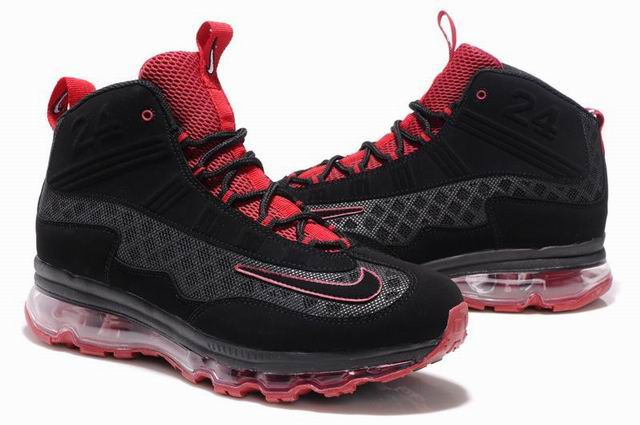
Image Source: Kevin Wu
Nike (NKE) experienced strong growth on its top and bottom lines during fiscal 2015, results released June 25. The branded shoe and apparel giant reported revenue growth of 10% to $30.6 billion, and diluted earnings per share of $3.70, a 25% increase. On a trailing price-to-earnings basis, that puts Nike’s multiple at close to 30 times earnings. Even if we look out a couple years to fiscal 2017 (ends in May), Nike is still trading at ~24 times forward earnings on the basis of its current price. That’s a pretty penny for a consumer discretionary entity that has ridden the wave of a strong economic environment for the past half-dozen years. Shares are trading at ~$110 at the time of this writing, and we think interested investors will almost certainly have a better entry point at another time.
Gross margin expansion, a lower tax rate, and a lower share count more than offset increased input and logistics costs and SG&A investments, helping to drive the significant pace of bottom-line expansion during the fiscal year. Nike’s higher-margin Direct to Consumer (DTC) business, which continues to experience solid momentum, and higher average selling prices across its portfolio helped to drive the higher profit levels. DTC revenues for the year grew 29% to $6.6 billion, excluding the impact of changes in foreign currency. At the end of May, the company had 832 DTC stores, compared to 768 at the same time in 2014. Nike’s connection to the consumer and ability to continue to deliver unprecedented innovation has management excited about the firm’s future–take a look at Nike’s new releases page. The executive team is quick to point out that growth potential is at an all-time high at the firm.
Apparel and footwear, two product divisions most closely associated with Nike, had solid revenue growth during the fiscal year, highlighted by 13% growth in footwear sales. Though the firm faced revenue pressure in Japan and emerging markets, revenue from North American, Western Europe, Greater China, and its Converse division expanded 12%, 15%, 18%, and 18% respectively, during the fiscal year. Nike brand footwear and apparel worldwide futures orders–to be delivered in the next 6 months–totaled $13.5 billion at the end of May, up 2% from the same time in 2014. The pace of futures growth was 13%, excluding currency changes, however, and we think the market liked the news in this department.
In early fiscal 2016, Nike will stand to benefit from the highest NBA finals viewership since Michael Jordan’s Chicago Bulls won their last title in 1998, as more than 75% of NBA players wear Nike or Jordan brand shoes. Nike is the likely choice to win the next NBA jersey contract, now that Adidas (ADDYY) is out of the picture. Nike controls over 90% of the US basketball shoe market, and rivals like Under Armour (UA) own a mere fraction and continue to struggle to make a “splash.” Footwear made up ~60% of Nike’s revenue in 2015, so the company’s turf will be defended at all costs. The growing middle class in China coupled with the growing popularity of the NBA in country, where Nike has a solid foothold already, are other key growth drivers for the shoe giant.
Nike’s fiscal 2015 results were great, but largely in-line with what we had been expecting for the year. The company’s revenue and earnings per share growth in 2015 puts it ahead of the pace it set for itself to achieve its goal of $36 billion in revenue by 2017, and we’d expect a modest bump to our fair value estimate upon the next update. Nike is well-positioned for continued expansion, and its brand is one of the most recognizable in the world, giving it intangible competitive advantages that won’t go away anytime soon. Nike may not have the explosive potential of Under Armor or Lululemon (LULU), but we reiterate our view that Nike has the best business model out of the three.