
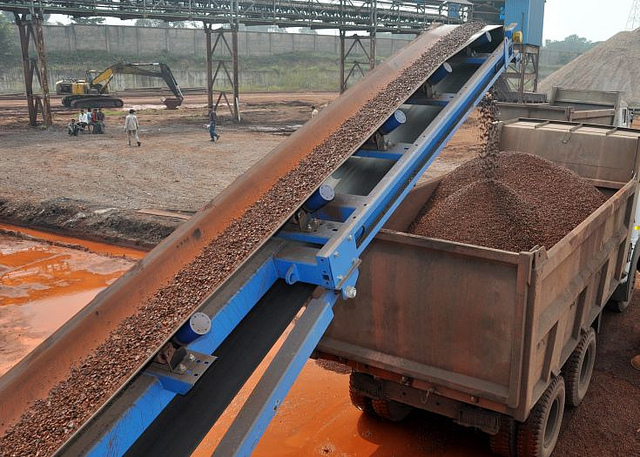
Image Source: Peter Craven
After an increase in iron ore prices in early 2016, some iron ore producers have warned that the rally may not be sustained, while others believe the beginning of a prolonged rebound may be in place. The Chinese economy (FXI), the largest consumer of iron ore in the world, remains in a transition phase while iron ore producers continue to increase production, with some producing at record levels. Many major suppliers are currently undertaking large investment projects that will create material production capacity growth in the future as well. Though we cannot deny the slight bounce in iron ore prices, we aren’t sure supply and demand rebalancing is right around the corner.
Recent headlines may cause some to believe that large-scale producers are beginning to rationalize production, as guidance reductions or warnings were common across the three largest iron ore producers after the first quarter of calendar 2016. The larger, lower-cost producers appear to remain focused on driving out smaller, higher-cost competitors through the supply glut to grab additional market share. Whether or not this will be a successful long-term strategy will continue to be debated, but investors must beware of the short-term growing pains that iron ore suppliers have brought upon themselves.
BHP Billiton (BHP) reported its third quarter results for fiscal 2016 April 20, and through the first nine months of the fiscal year, iron ore production was down a mere 1% on a year-over-year basis. The firm reduced its guidance for full-year production by 3% to approximately 229 million tonnes (Mt), but this is still a notable increase over fiscal 2015 production of 218 Mt. This expected increase in production comes despite the disastrous failure of a dam in the firm’s iron ore joint venture, Samarco, with Vale (VALE) in Brazil that killed at least 17 people and resulted in the shutdown of production at the joint venture. Samarco is expected to pick up operations before the end of 2016, though the exact timing remains uncertain at this point.
Vale also made a cautious statement regarding its production in 2016. After reporting record production levels for the first quarter of the year April 20, the company noted that it now expects annual production to be at the lower end of its guidance range of 340-350 Mt. This guidance is largely similar with ~346 Mt of production in 2015 but excludes the firm’s production of iron ore pellets, which added 58.5 Mt of production in 2015. Though explicit guidance was not given, iron ore pellet production through the first quarter of the year was slightly higher than the comparable period in 2015, despite the shutdown of production at Samarco, which accounted for more than 20% of Vale’s iron ore pellet production in the year. Vale is also preparing to complete the largest investment project in its history, which will become operable in the second half of the year.
Former Best Ideas Newsletter portfolio holding Rio Tinto (RIO) reported its first quarter production results April 19, having increased iron ore production by 11% in the quarter on a year-over-year basis thanks to the completion of a variety of developments and expanded production capacity in the Pilbara region of Australia in 2015. The company reiterated its full-year 2016 iron ore production guidance of 350 Mt, which represents a nearly 7% increase from 2015. It did, however, lower its 2017 guidance to a range of 330-340 Mt from previous guidance of 350 Mt, but this guidance remains subject to future productivity and capital expenditure policies. A lot can change in the next year and a half, and we don’t think a 10-20 Mt cut to 2017 production guidance from one supplier should have a material impact on the near-term outlook of the iron ore market at this point in time.
As these companies continue to pump the market full of iron ore, we again must warn investors of the near-term pains they are likely to experience. Income investors are already aware of such troubles after each of the “Big 3” iron ore producers were forced to cut their dividends in early 2016, and we continue to warn against the holding of commodity-linked equities for income purposes. Even the best management teams have difficulty operating through the boom and bust cycles of the industry, and we can only hope that iron ore producers do not have an irrational knee-jerk reaction to the recent rally in prices, which would cause even more suffering further down the line.
Metals & Mining – Diversified: BHP, CLF, FCX, RIO, SCCO, SLW, VALE
Related symbols: FCX, XME, EWA