
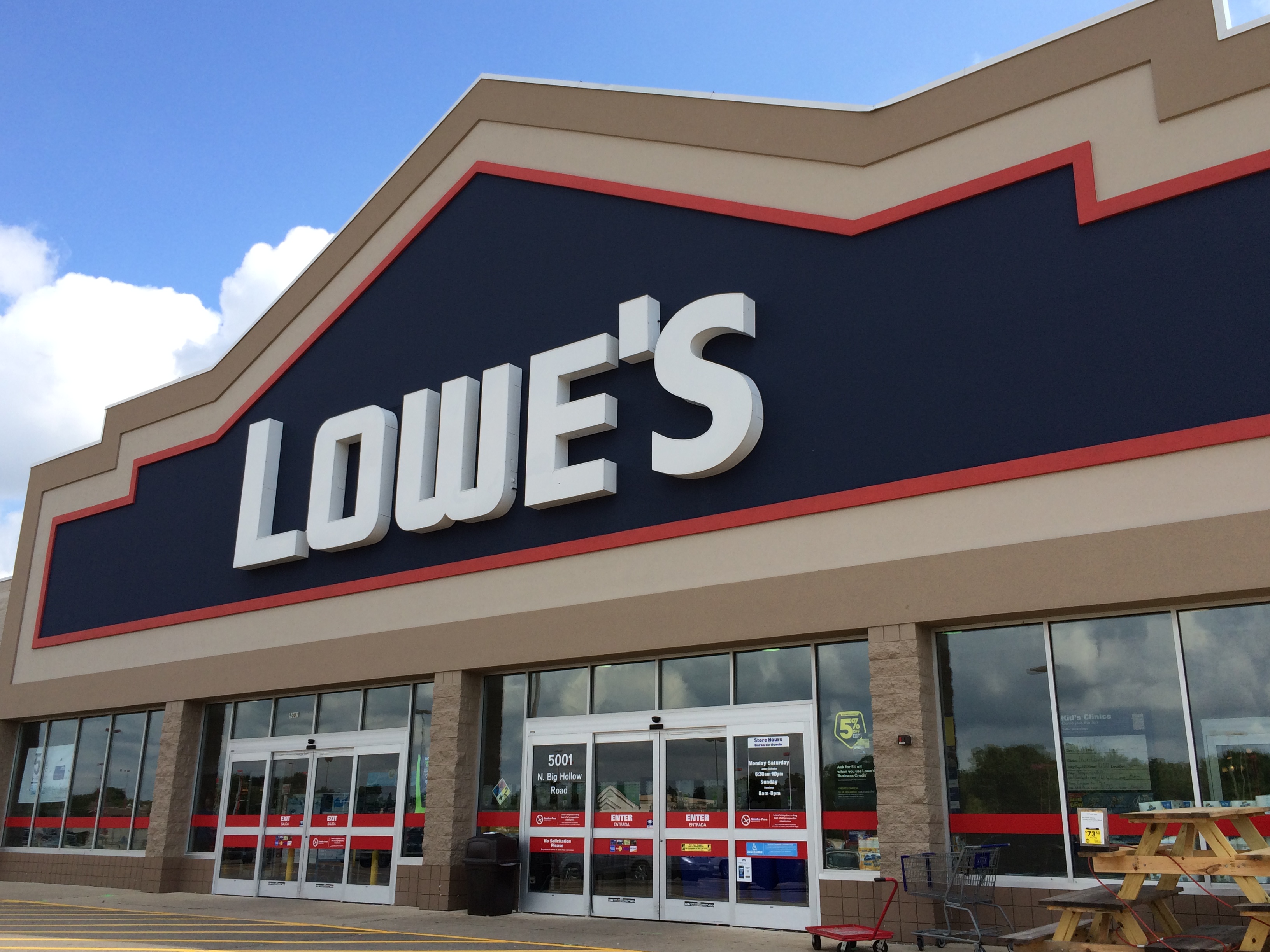
The story for home improvement retail giants has remained largely unchanged in recent quarters. Demand for home improvement goods has been high, as has general housing demand. This has driven traffic increases for the likes of Home Depot (HD) and Lowe’s (LOW) thus far in 2015.
Home Depot reported sales growing 6.4% from the year-ago period to $21.8 billion in its fiscal third quarter of 2015, and comparable store sales increased 5.1% in the quarter. The firm’s number of customer transactions advanced by 4.4% in the period, while its average ticket price grew nearly 1%. The company’s sales per square foot grew by more than 5% in the quarter on a year-over-year basis.
Home Depot’s impressive top-line trends were mostly driven by increased demand for its professional products and DIY categories. This is a reflection of the strong home improvement market across the US, where the firm’s comparable store sales and average ticket price growth outpaced the total company’s growth rates. Pent-up demand from the Great Recession remained prevalent for consumers’ larger expenses and projects. Home Depot reported transactions of $900 or more grew at 7.8% in its third quarter of fiscal 2015, handily outpacing smaller ticket transactions.
Supporting Home Depot’s DIY segments were ‘above-company-average’ comparable sales in categories such as decorative holiday, organization, and appliances. Generally speaking, these categories are comprised of tasks that are easily completed without significant help form a professional, and as a result, enable consumers to complete projects and spend on their own whims. Increased flexibility to do what one wants when one wants is a key selling point, in our view.
Momentum in Home Depot’s online sales, which grew 25% in the quarter, should also benefit the company’s ability to take advantage of the average consumer’s desire to get things done around the house. Online sales now account for just over 5% of the firm’s total sales. Worth noting is the fact that 42% of online sales are picked up in-store by the customer, meaning that Home Depot does not have any shipping and handling or additional packaging responsibility for these items. This has the potential to magnify the margin improvements often seen from growing online sales.
All of these positive trends led to significant bottom-line growth in the quarter for Home Depot. Diluted earnings per share advanced 17.4% on a year-over-year basis to $1.35 in the period. This material earnings increase helped drive free cash flow growth of nearly 20% during the first three quarters of fiscal 2015, to $6.3 billion. Such free cash flow generating capacity facilitates the company’s solid Dividend Cushion ratio, despite a net debt position of ~$14.8 billion. The Dividend Cushion ratio is a function of a firm’s future free cash flow stream relative to future expected cash dividends paid in the context of its balance sheet.
Home Depot’s third quarter was quite strong compared to what management is expecting for the full fiscal year. For 2015, sales are projected to grow 5.7%, with comparable sales growing just under 5%, and diluted earnings per share are anticipated to be $5.36, 14% higher than the reported number for 2014. The company also plans to have repurchased $7 billion worth of its shares in fiscal 2015, which leaves it with ~$2 billion more to repurchase in the fourth quarter. At current price levels–and at prices throughout much of 2015 for that matter–we do not find this to be a prudent allocation of capital.
As with any investor, we think it makes sense to buy stock when shares are “super cheap,” or at the very least, when shares are trading below fair value. We don’t think this is the case for Home Depot, and by extension, we’d consider such repurchases as value-destroying. Once the inevitable cyclical economic downturn happens, we think investors will see why.
Home improvement rival Lowe’s is also buying back shares at a rapid rate, and its valuation, too, is not appealing, in our view. The firm has bought back $3.3 billion in shares thus far in fiscal 2015 and has a robust share buyback program currently in place. Given both companies’ net debt positions–Lowe’s has a net debt position of over $12 billion–we think there are much better uses for this capital. Why not delever the balance sheet when times are good?
There were many more parallels in the two companies’ fiscal third quarters. As with Home Depot, the top line fared pretty well. Lowe’s reported sales growth of 5% in the quarter on a year-over-year basis to $14.4 billion, and comparable sales grew 4.6%. This growth was driven by ‘number of transactions’ increasing 2.5% and ‘average ticket prices’ advancing 2% from the year-ago period.
Lowe’s was able to efficiently manage its payroll by keeping sales per hour growth in line with comparable sales expansion. This was a key driver, and with additional SG&A and gross margin improvements, the firm was able to grow diluted earnings per share by more than 35% on a year-over-year basis, to $0.80. Earnings expansion didn’t flow nicely into the company’s cash flow generation, however, as cash generated from operations was impacted by inventory timing. Increased capital expenditures offered yet another drag on free cash flow generation; a total of $3.7 billion in free cash flow through the first nine months of 2015 was a reduction of nearly 10% from the year-ago period.
The increase in internal investments directly relates to Lowe’s plans to open 15-20 new stores in the full fiscal year for 2015 (ending January 2016). Along with this, management provided sales growth guidance of 4.5%-5% growth for the full fiscal year, driven by expected comparable sales growth of 4%-4.5%. EBIT (operating) margin expansion of 80-100 basis points is expected to drive diluted earnings per share to ~$3.29, good for growth of over 21%, in the full fiscal year as well.
All things considered, both Lowe’s and Home Depot have been performing well on a fundamental level, and we expect them to deliver on their strong guidance for the full fiscal year. That said, we think both should re-think their capital allocation plans and perhaps target debt repayment instead of share buybacks. We know very well of the cyclicality of the homebuilding industry, and there’s no such thing as “too little debt,” in our view. We’re not interested in the stocks of either company at current price levels, and the finance departments at both companies shouldn’t be either. The next economic downturn will tell the story why.
Related Tickers: XHB, ITB