
It may seem like something is different, but nothing has changed since the last edition of the Best Ideas Newsletter. We’ll continue to provide spot-on analysis across our entire coverage universe.
For some of our new members that may not be familiar with our independent investment research firm, we publish two newsletter portfolios. The Best Ideas Newsletter portfolio is housed in this publication, the Best Ideas Newsletter, which we release on the 15th of the month. The other newsletter portfolio that we produce is the Dividend Growth Newsletter portfolio, and that portfolio is housed in the Dividend Growth Newsletter, which we release on the 1st of each month.
The newsletters are a companion to the research we produce on our website on a daily basis.
I know some of you are anxiously awaiting the release of this month’s Dividend Growth Newsletter. I appreciate your patience. We will release the July edition of the Dividend Growth Newsletter on the first of July, as originally scheduled. Concurrent with that release, we will also release our quarterly financial advisor publications, the Dividend100, the Ideas100, and the DataScreener. If you are not currently but are interested in receiving these quarterly publications, please be sure to let us know. We also have fully-populated discounted cash-flow models supporting every fair value estimate on our website.
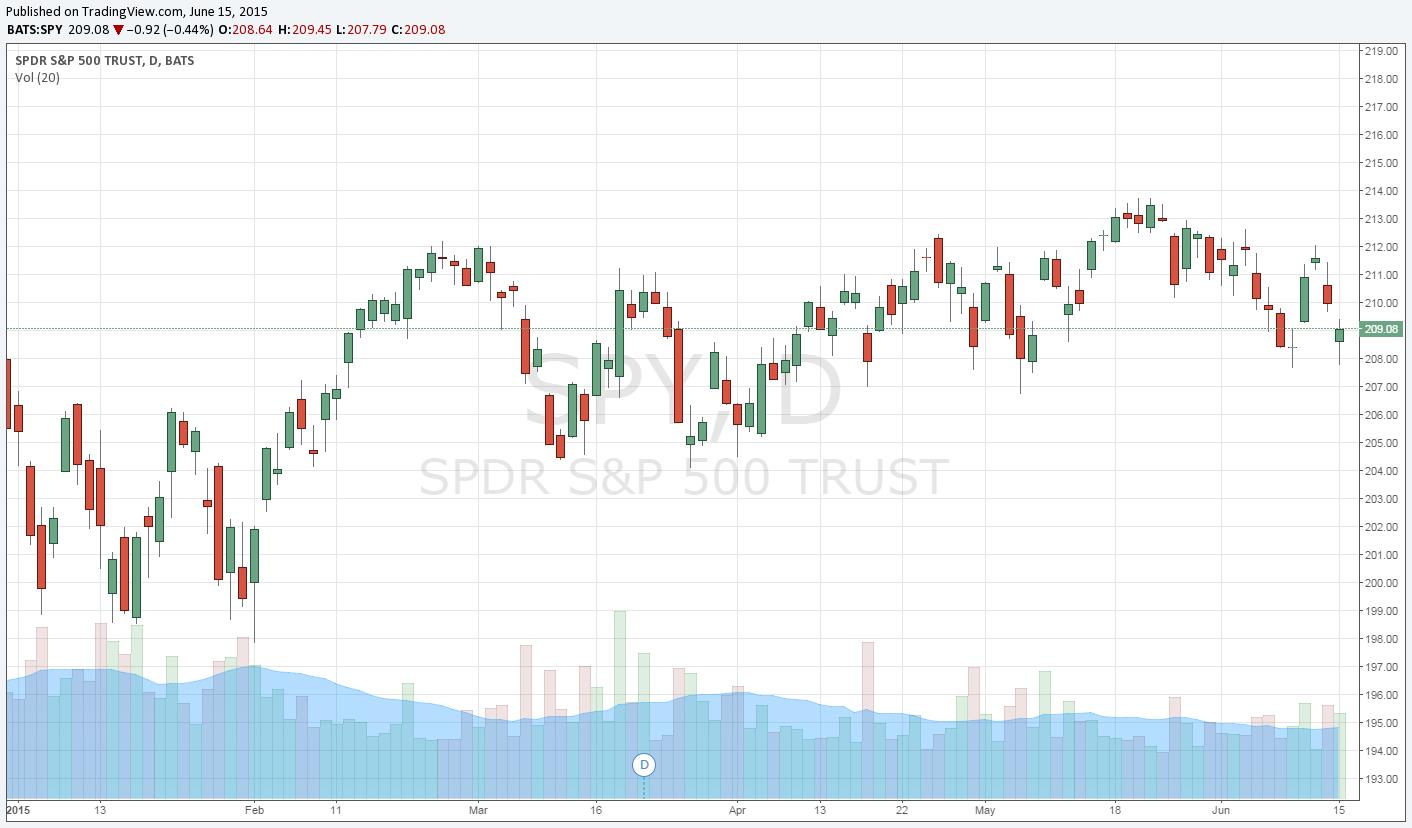
The S&P 500 has essentially been flat since the beginning of the year, and it didn’t do much since the last edition of this newsletter.
We won’t waste much of the valuable space in this publication addressing the implications of the breakdown in talks between Greece (GREK) and its European creditors, an event that has been all over the news as of late, but we’ll give it a brief mention, if only to dismiss it. The Greece economy is peanuts (or mostly olive oil but you get my drift–it’s small), and you’d be hard-pressed to find US equities outside of the tanker industry that are based in the country. There may only be a couple dozen Greece ADRs trading on the US OTC markets, hardly the S&P 500 or the FTSE 100. The global financial system has been monitoring the situation in Greece for years, and any potential default will be a complete non-event, in our view.
We’re focusing our attention elsewhere, and we think most other investors should, too. But where?
The more important conversation rests on the valuations of US equities and what might happen should the discounting mechanism via increased interest rates take hold. Any portfolio manager worth his salt will tell you that the market looks 2-3 quarters ahead, and we’ll know fairly certain when the beginning of a contractionary period of monetary policy will take hold when the equity markets start to weaken. Nearly 6 months into 2015 and with the market still resilient, our experience tells us that we won’t see any action by the Federal Reserve until at least 2016. But that may not matter. 2016 is coming. Not even the Oracle of Omaha himself can stop time from passing.
The mantra continues: equity prices are a forward-looking indicator to economic activity, not the other way around. There have been several quarters during the past several years alone, where an economic contraction has surfaced, most recently in this year’s first quarter, and the market continued to advance, albeit modestly as of late. Economic observers help us in understanding where the economy has been, certainly not where the stock market is going. But even the market as a predictive mechanism is far from perfect. This tidbit of wisdom from economist Paul Samuelson dates back to September 1966: “Wall Street indexes predicted nine out of the last five recessions.”
We’ve been telling clients that we’re more worried about the implications of rising interest rates on the behavior of dividend holding entities than on the general impact to valuations. The healthcare and consumer staples sectors are two of the most overpriced sectors in the economy today, and two of the most income heavy. Investors must continue to weigh the risks of income growth in the future with capital market risk today. If the risk free rate eventually rises to 5%, what should the yields be on risky assets like stocks–and if lower stock prices are warranted, how much lower? Will the ensuing capital loss erode the present value stream of increased dividends? These are the right questions.
We’ve generally been pleased with performance from Best Ideas Newsletter portfolio constituents. Gilead Sciences (GILD) has set new highs, and I appreciate the e-mails from members on the call. Alibaba (BABA) has seen better days, but we don’t think the Street completely understands the earnings leverage tied to its monetization rate. Even a couple basis points of improvement in the metric relative to existing expectations could drive the stock materially higher. Apple (AAPL) is still hovering around all-time highs, and we don’t think its run is over yet. Priceline (PCLN) has broken its downtrend, and we’re watching that one closely. Please be sure to view the entire portfolio on page 8.
Overall, we like what we see and how we’re positioned. The portfolio is flush with a ~30% cash position, and we won’t hesitate to highlight the next best idea for addition. From cyber security to bird flu to economic profit generation in the airline sector, I hope you enjoy this edition of the Best Ideas Newsletter. Cheers!
<newsletter scheduled for release by email on the evening of 6/15/2015>